

BLOG
Down vs Down Alternative Comforters: Which Should You Choose in 2026?
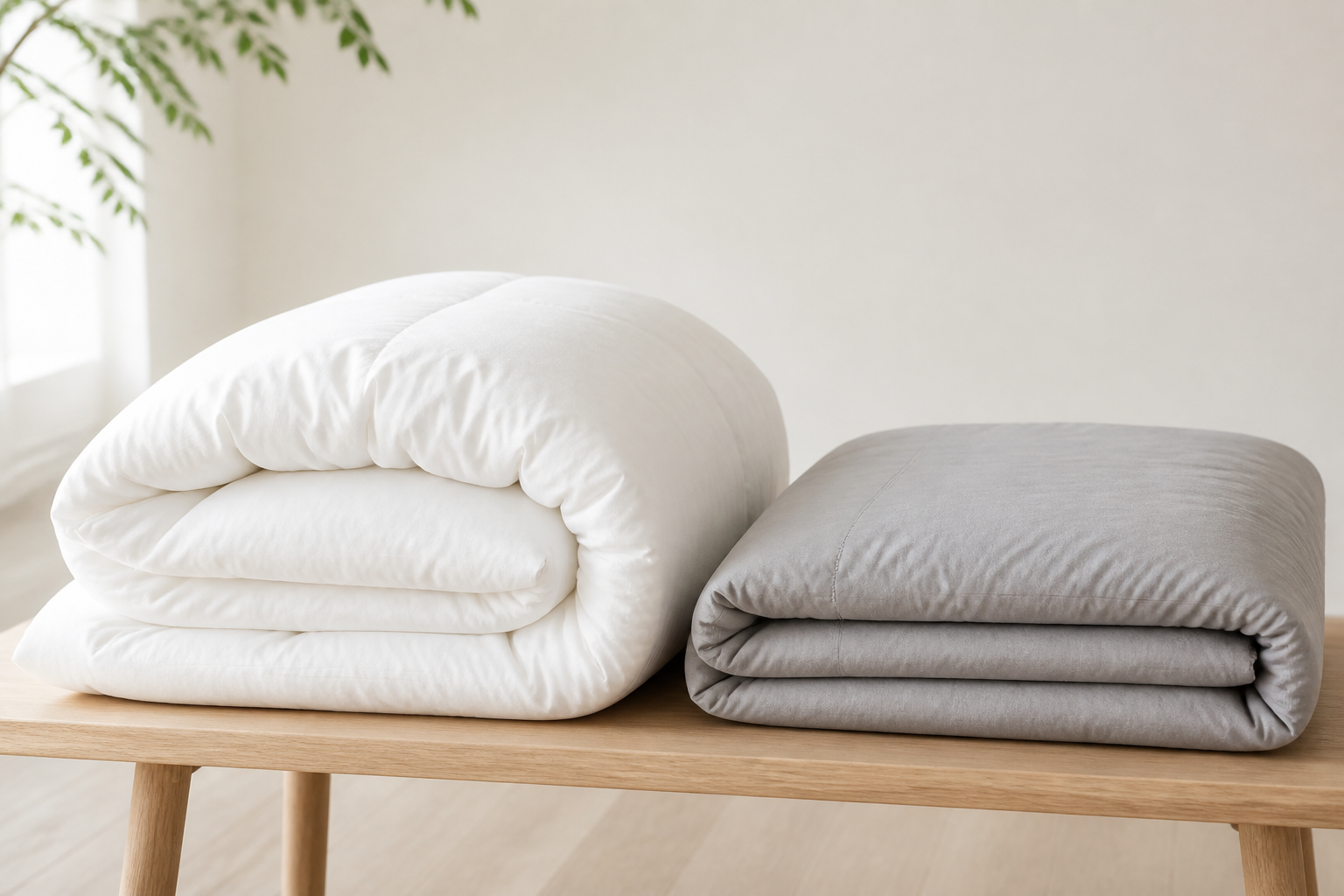
Short answer: Choose real down when you need the best warmth-to-weight ratio and premium comfort for hotels or high-end retail; choose down alternative when you need hypoallergenic, animal-free, lower-cost bedding that still feels soft. The right choice depends on your target market, budget and product positioning â and this guide breaks down the trade-offs for buyers and brands.
---
Why This Decision Matters for Bedding Buyers
When you source comforters for a hotel chain, a retail brand or a wholesale program, the filling decision drives your cost, your marketing claims and your customer satisfaction. Get it wrong and you face returns, allergy complaints or margin pressure. Get it right and you have a product line that sells itself.
This comparison is based on industry-standard knowledge plus the experience of manufacturers like Anhui Comfytouch Ltd, a bedding factory with more than 20 years in the home textile industry.
---
What Is the Difference Between Down and Down Alternative?
| Factor | Real Down | Down Alternative (Microfiber) |
|---|---|---|
| Filling material | Goose or duck down clusters | Siliconized microfiber (polyester) |
| Warmth-to-weight ratio | Excellent â very warm with less weight | Good â warm but heavier for same warmth |
| Loft and fluffiness | Superior, springs back after compression | Decent, improves with high-quality fiber |
| Hypoallergenic | Not inherently; depends on cleaning and certification | Naturally hypoallergenic and dust-mite resistant |
| Animal-derived | Yes | No â vegan-friendly |
| Washability | Machine washable, requires care | Easy to wash and fast-drying |
| Price point | Higher | Lower, better margins for budget lines |
| Best for | Hotels, premium retail, cold climates | Allergy-sensitive hotels, kids' bedding, budget lines |
---
How Do You Choose Between Down and Down Alternative Comforters?
Ask Your Customers These Three Questions First
What is their allergy situation? If dust mites or feathers are a concern, down alternative is the safer recommendation â it is naturally hypoallergenic.
What climate are they in? For cold Nordic or North American winters, real down's warmth-to-weight ratio is hard to beat. For mild or warm climates, a lighter microfiber comforter is enough.
What is their price positioning? Real down supports premium pricing; down alternative supports competitive pricing with healthy margins.
Why Quality Matters More Than the Filling Type
The biggest mistake in this category is comparing "cheap down" with "premium microfiber." A low-quality down comforter with feather quills can prick through the shell and shed; a premium siliconized microfiber comforter can feel nearly as luxurious at half the cost. Buyers should evaluate the actual sample, fill power (for down) and fiber quality (for alternative) rather than the label alone.
---
What Are the Certification Considerations?
For real down, look for:
RDS (Responsible Down Standard) â verifies down comes from animals treated humanely
Downpass â quality standard for down and feather
OEKO-TEX Standard 100 â confirms no harmful substances
For down alternative:
OEKO-TEX Standard 100 â the key certification for fiber safety
GRS (Global Recycled Standard) â if you want recycled fiber content
Comfytouch's factory is certified for BSCI, RDS, Downpass, GRS and OEKO-TEX Standard 100, covering both filling types under one roof â which simplifies compliance for buyers.
---
Which Is Better for Hotels vs Retail Brands?
| Buyer type | Recommended filling | Why |
|---|---|---|
| Hotels (allergy-sensitive guests) | Down alternative | Hypoallergenic, washable, lower replacement cost |
| Luxury hotels | High fill-power down | Premium feel, brand story, warmth without weight |
| Mid-market retail brands | Down alternative | Cost-effective, easy care, broad appeal |
| Premium retail brands | Down | Higher price point, natural luxury positioning |
| Kids' and school bedding | Down alternative | Allergy-friendly, easy to clean, durable |
---
What Does Down Alternative Feel Like vs Real Down?
Real down is famously cloud-like: it traps air in tiny clusters, creating deep loft that recovers quickly after compression. Down alternative cannot fully replicate that air-trapping structure, but high-quality siliconized microfiber comes surprisingly close â and it does not clump or shift as easily after repeated washing. For most guests, the difference is noticeable but not a deal-breaker; for down purists, it is.
---
Frequently Asked Questions
Q1: Is down alternative as warm as real down?
A: Not weight-for-weight. Real down offers a higher warmth-to-weight ratio, so you need less down to achieve the same warmth. However, a properly filled down alternative comforter can still be very warm â manufacturers simply use more filling.
Q2: Why is down alternative cheaper than down?
A: Down is a natural material with limited supply, manual sorting and certification costs. Siliconized microfiber is mass-produced polyester, so it costs a fraction of the price â which is why it dominates the mid-market.
Q3: Can allergy sufferers use down comforters?
A: Some can, if the down is washed to high standards (turbidity rating well above EU requirements) and enclosed in a tightly woven shell that prevents feather particles escaping. But for guaranteed allergy-friendly bedding, down alternative is the safer choice.
Q4: Which lasts longer â down or down alternative?
A: High-quality down can last 10-15 years with proper care, which is why luxury brands offer long warranties. Premium microfiber lasts 5-10 years. However, cheap down can lose loft faster than good microfiber, so quality within each category matters more than the category itself.
Q5: Can you mix down and down alternative in one product line?
A: Yes â many brands offer both lines to cover different price points. A factory like Comfytouch can produce both under the same roof, keeping quality control consistent across your range.
Q6: What should a first-time importer order?
A: Start with a small trial order of each filling type, test them with your customers, then scale the winner. Reputable manufacturers will produce samples first so you can evaluate before committing.
---
What Should You Do Next?
Define your target market â luxury, mid-market or budget.
Request samples of both down and down alternative comforters from a certified factory.
Compare on the actual product, not just the spec sheet.
Check certifications â RDS/Downpass for down, OEKO-TEX for both.
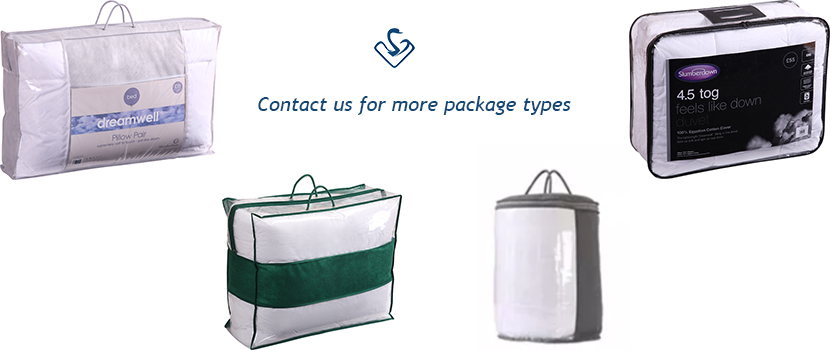
Anhui Comfytouch Ltd produces both real-down and down alternative comforters with OEM.html target='_blank'>ODM/OEM service, certified production and a daily capacity of 10,000â20,000 pieces. If you are sourcing for 2026, contact us to request samples and discuss your program.
---
Sources
OEKO-TEX Standard 100 â https://www.oeko-tex.com
Responsible Down Standard (RDS) â https://responsibledown.org
Heimtextil (international home textiles trade fair) â https://heimtextil.messefrankfurt.com
US National Sleep Foundation â https://www.sleepfoundation.org
Related Articles
Related Photo
Categories
Latest News
- Comfytouch Bedding Heads to EQUIPO2026-09-02
- Heimtextil 20262026-01-14
- Join us in Frankfurt {13 to 16 Jan2025-11-11
- The 138 th canton fair in guanzhou2025-11-11
- Attending the 138th Canton Fair in2025-10-23


 Email
Email
 WhatsApp
 WeChat
 Phone
Phone