

BLOG


How to Create the Perfect Sleep Environment at Home?
A sleep-friendly bedroom is built from four controllable variables — light, noise, air and surface — and bedding is only the fourth. Most people change the bedding first because it is the easiest to buy, then wonder why they still wake at three in the morning with a streetlight on the ceiling and a radiator ticking.
This guide treats the room as a system. Each section names one variable, the first move that usually pays off, and what bedding can and cannot fix.
What Actually Makes a Bedroom Sleep-Friendly?
The body does not decide to sleep because a room is quiet; it decides because the signals that keep it awake have gone away. Light falling on the eyelids suppresses melatonin, a dropping core temperature is part of falling asleep, and intermittent noise keeps the nervous system at a low level of vigilance even when it does not fully wake you. Comfortable bedding removes the friction — the too-warm duvet, the pillow that needs reshaping at 2 a.m. — that turns a near-miss night into a broken one.
That hierarchy is useful when money is limited. A blackout blind and a quieter bedroom door change the room for everyone in it every night; a new duvet changes one variable on one bed. Start with the variables that act on the sleeper whether or not they notice, and treat bedding as the layer that fine-tunes the result.
Light: What Should You Control First?
Get the room dark enough that you cannot read a page at midnight. That is a practical test, not a specification, and it exposes how much light a room actually leaks: standby LEDs, a router, a phone face-down on a charging cable, the strip under the door.
The first moves are cheap and cumulative. Fit blackout lining behind existing curtains if a full blind is not possible, move or tape over standby lights, and keep the room's own lighting warm and low before bed rather than bright and blue-white. For a bedroom used in the evening, a lamp on a low shelf gives useful light without throwing it across the bed.
Morning light matters as much as evening darkness. Daylight through the window on waking is the strongest signal available to reset a body clock that has drifted, which is why a blackout blind is worth pairing with a curtain that can be opened fully rather than a fixed shutter.
Noise: What Works Better Than Blocking It?
Remove the noise you can, mask the noise you cannot. Blocking is expensive and rarely complete; masking is cheap and often enough. A fan, a small white-noise unit or a heavy curtain that dulls traffic will do more for a light sleeper than an expensive window upgrade that still lets the 6 a.m. delivery through.
Two details matter more than people expect. Intermittent sound — a door, a dog, a neighbour's television — disrupts sleep more than a steady sound at the same volume, so a constant low-level mask is the better investment. And sound travels through gaps: a draught excluder under the bedroom door is the cheapest acoustic fix in the house.
Temperature and Air: Why Ventilation Beats a Warmer Room?
A bedroom should be cooler than the rooms you sit in, and it should have moving air. A closed, heated bedroom raises the humidity from breathing overnight, and a warm, still room makes bedding feel heavier than it is — which is the point where people blame the duvet for a problem that belongs to the radiator.
The first move is to turn the heating down in the bedroom and keep a window or vent open enough for air exchange, without creating a draught across the bed. If the room is cold, add bedding weight rather than room heat: a duvet is easier to adjust at 3 a.m. than a thermostat, and it acts only where it is needed.
Scent and Texture: Where Do They Fit?
Scent and texture are the finishing layer, and they are the two variables most likely to be oversold. A familiar smell can help a routine feel settled, but nothing in the bedding aisle will sedate anyone. Treat scent as a cue that the day has ended, not as a treatment.
Texture works the other way: it is a comfort variable with a measurable effect on how often you wake. A sheet that clings, a pillowcase that feels cold then damp, a duvet cover with a scratchy seam — each produces a small adjustment during the night, and each adjustment is a chance to surface. This is the same mechanism covered in our guide to how bedding affects sleep quality, where the fabric is matched to the sleeper rather than to the room.
How Much of This Is Bedding, and How Much Is Behaviour?
Both, in a fixed order. The room sets the ceiling on how well you can sleep; behaviour decides whether you reach it.
| Variable | First move | Cost to try | How soon it shows |
|---|---|---|---|
| Light | Blackout lining, kill standby LEDs | Low | Same night |
| Noise | Mask steady sound, seal the door gap | Low | Same night |
| Temperature and air | Cooler room, vent open, weight in the bedding | Low | A few nights |
| Bedding surface | Fabric and fill matched to how you sleep | Medium | A few nights |
| Scent and light cues | Dim warm light before bed, one familiar cue | Low | A week or more |
| Routine | Same sleep and wake time, phone out of reach | Free | A week or more |
Read the table as an order of work rather than a shopping list. The last two rows cost nothing and are the hardest to keep, which is why they are usually the ones that fail.
What Should You Specify When Bedding Is Part of the Environment?
If you are buying bedding for a household, a rental property or a hotel room, the environment tells you what to specify — not the other way round.
- Choose a fill weight for the room's temperature and for how the sleeper runs, not for the season label on the pack
- Prefer breathable natural covers in a warm, still room; a heavier fill will not fix humidity
- Use a washable protector if the room is shared or let short-term, so the surface is genuinely clean between guests
- Specify pillow height against sleeping position, because a flat pillow in a warm room is the most common cause of night waking
- Check that the duvet fits the bed and the cover fits the duvet, since a bunched duvet behaves like a heavier one
- Keep one lighter and one warmer option per bed where rooms face different directions
Our own product pages group these by function rather than by season: duvets and Comforters for the warmth layer, pillows for support, and protectors for the washable barrier beneath both.
How Does Comfytouch Fit Into This?
Comfytouch is the bedding brand of Anhui Comfytouch Ltd, an OEM and ODM manufacturer in Hefei, Anhui, with its own factory and two lines: home bedding and hotel bedding. Because the room decides the specification, we quote against the climate, the laundry routine and the bed size a buyer actually runs, for buyers in Europe, North America and South America.
Our certifications are: OEKO-TEX Standard 100 No. 21.HCN.83824 | ISO 9001:2015 No. ECI22Q00239R1S | ISO 14001:2015 No. ECI22E00129R1S | BSCI copy on request.
Two external references are worth a look before the next buying round. The evidence base for light, temperature and routine is summarised in the reference entry on sleep hygiene, and OEKO-TEX Standard 100 explains what the certification actually tests on a finished article, which matters when you are specifying bedding for a rented room. Buyers who specify for hotels usually compare constructions at Heimtextil before placing a programme.
Frequently Asked Questions About Sleep Environments
What is the single most effective change to a bedroom?
Make it darker. Light reaching the eyes is the strongest signal working against sleep, and it is the cheapest variable to control with a blackout lining and a few taped-over standby lights.
Does a cooler room really help?
A falling core temperature is part of falling asleep, so a bedroom cooler than the living space supports that drop. The useful version is a cool room with moving air and enough bedding to stay comfortable, not a cold room with a heavy duvet.
Is a white-noise machine worth it?
For a light sleeper beside intermittent sound — traffic, doors, neighbours — a steady low-level mask usually helps. It does nothing for a room that is already quiet, and it should not be loud enough to become its own distraction.
Can bedding make a warm room feel cooler?
Only partly. A breathable cover and a lighter fill reduce how much heat is trapped, but they cannot remove humidity from a closed room. Ventilation does the work; bedding stops it being undone.
How often should bedding be washed for a spare room?
Wash before each guest and air the room between uses. A room that is closed for weeks holds damp and stale air, and the first night in it is usually the worst night in it until the window has been open for an hour.
Is a sleep routine really part of the environment?
It is the part of the environment you carry with you. A consistent sleep and wake time, and a dark, cool room, reinforce each other; neither works as well alone.
Plan the Bedding Around the Room You Actually Have
Tell us the room — its climate, how it is heated, whether it is let short-term, and how it will be laundered — and we will recommend a bedding specification that fits it rather than a season label. If you are specifying for several rooms with different orientations, say so, and we will quote a lighter and a warmer option for each bed.
Write to info@comfytouch.cn with your bed sizes and the routine the bedding will face, and we will reply with fill, fabric and construction options for that brief.
Related Photo
Silk Bedding Sets: What to Ver
What to verify before ordering silk bedding sets: configuration, shade
Silk Pillowcases for Hotels: M
How hotels specify silk pillowcases: weave, momme, closure and seam co
Goose Down and Duck Down Duvet
How to compare down duvets on fill power, fill weight and construction
Goose Down vs Duck Down Pillow
Goose down vs duck down pillows compared on loft, fill weight, constru
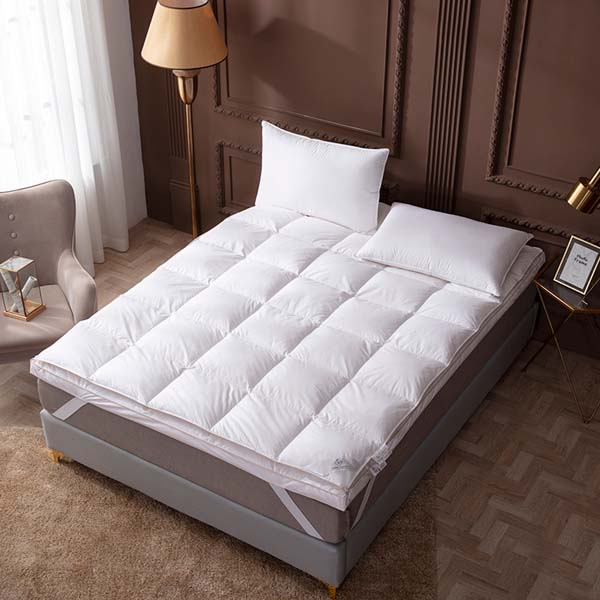
Duck Down and Feather Mattress
What hotels should specify in a down and feather mattress topper: fill

How to specify duck feather cushion cores for upholstery and hotel pro
Categories
Latest News
- Comfytouch at the 140th Canton Fai2026-10-09
- Comfytouch Bedding Heads to EQUIPO2026-09-02
- Heimtextil 20262026-01-14
- Join us in Frankfurt {13 to 16 Jan2025-11-11
- The 138 th canton fair in guanzhou2025-11-11


 Email
 WhatsApp
 WeChat
 Phone