

BLOG
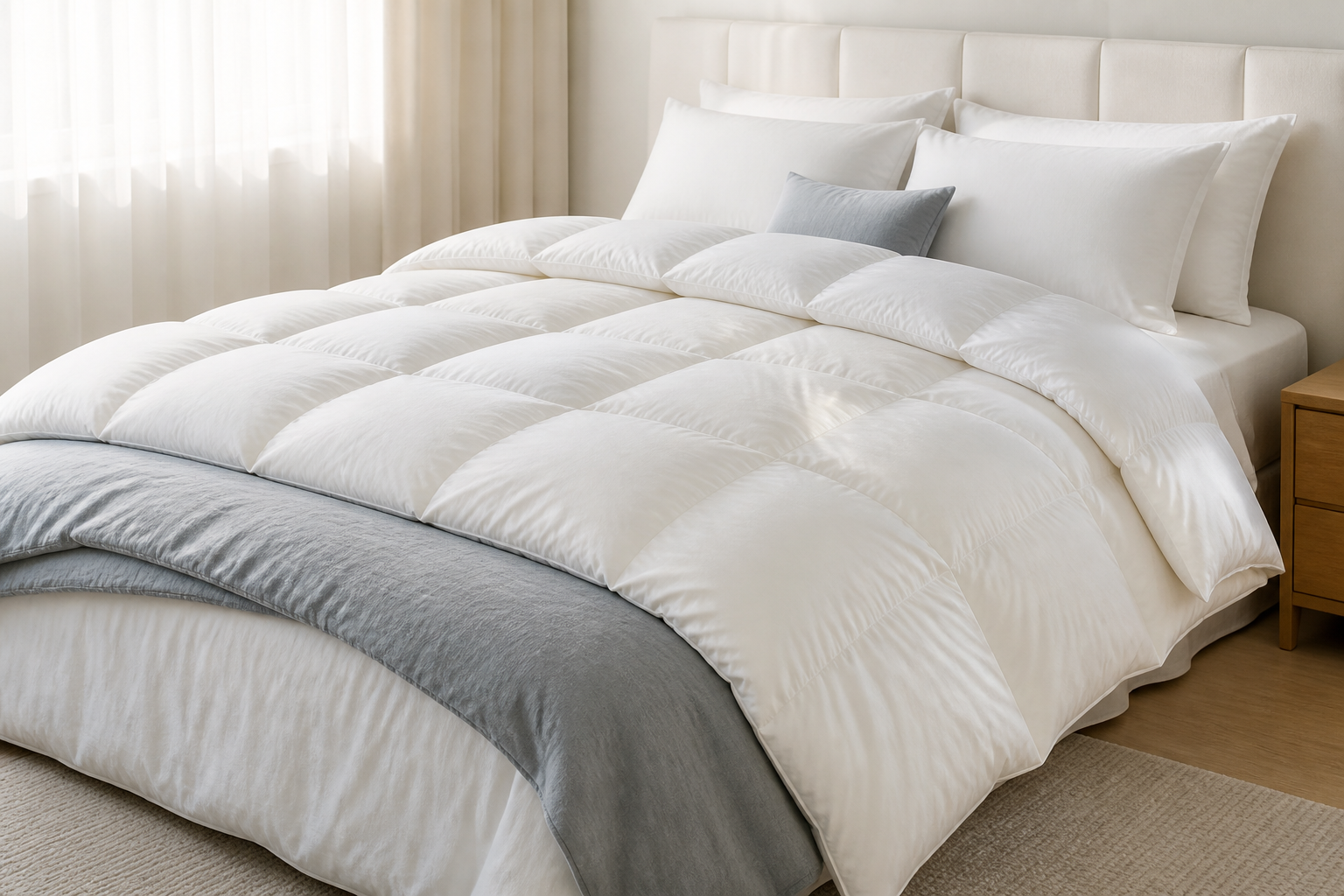
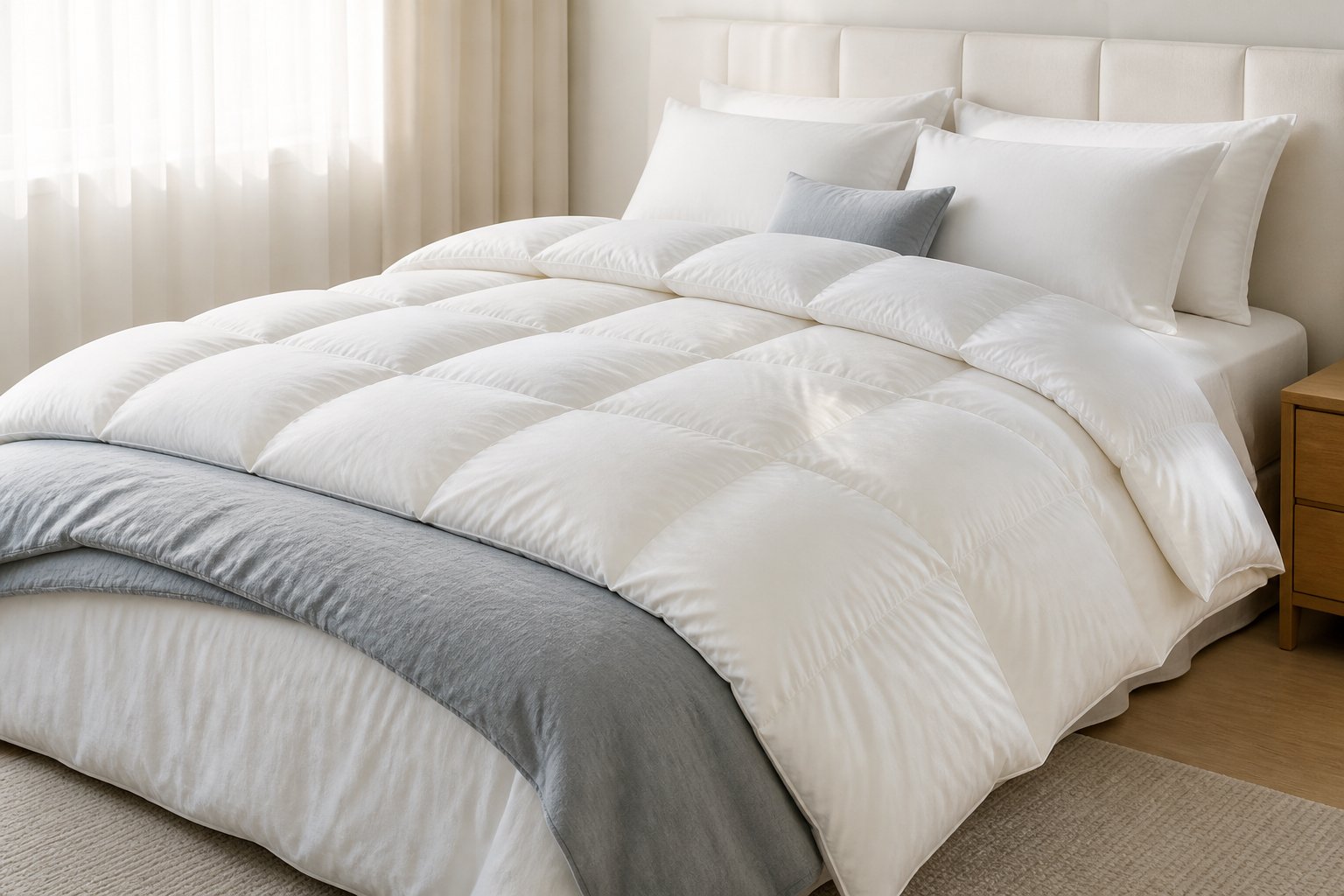
How to Choose Duvet Fill Power: A Buyer's Guide
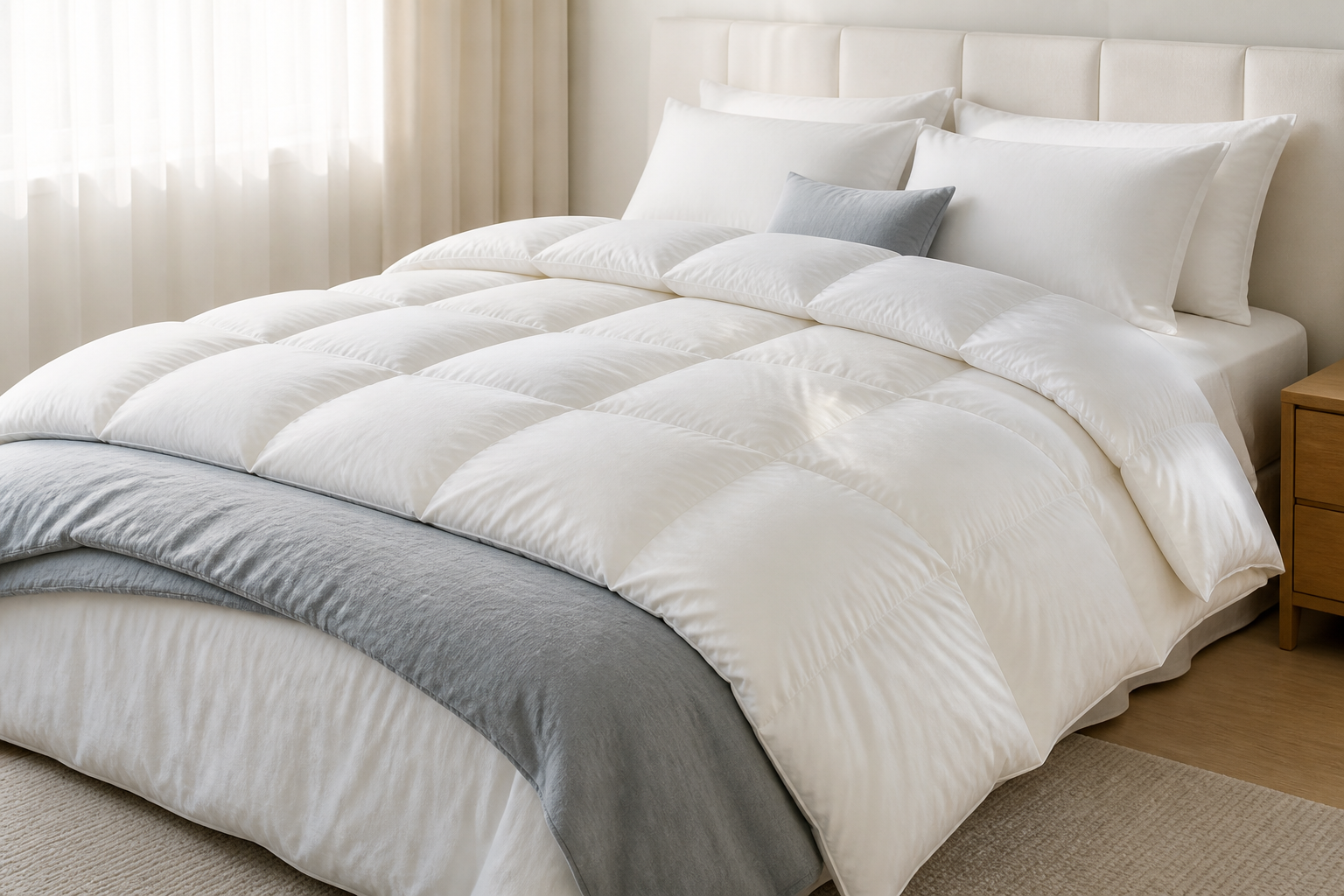
Short answer: Fill power measures how much loft a down cluster produces per ounce 鈥?the higher the number, the warmer the duvet at the same weight. For most buyers, 550鈥?50 fill power is the all-season value zone, 650鈥?50 is the premium sweet spot, and 750鈥?00 is lightweight luxury warmth. Never buy on fill power alone: always pair it with fill weight, down content percentage and independent certification (RDS, OEKO-TEX Standard 100).
Fill power is the single most-quoted number in the down bedding industry 鈥?and the most misunderstood. Retailers and hotel procurement teams see "750 fill power" on a label and assume it means warmer. It doesn't. This guide explains what fill power really measures, how it is tested, and how to combine it with fill weight, down content and certification to match your price point and your market. Anhui Comfytouch Ltd has manufactured down Comforters, Pillows and bedding for more than 20 years in our Hefei facility, producing 10,000鈥?0,000 pieces a day for customers including Lidl and Aldi.
---
What Is Duvet Fill Power?
Fill power is a laboratory measurement of loft 鈥?how many cubic inches one ounce of down occupies after it has been allowed to fully expand. The standard test method is defined by the International Down and Feather Bureau (IDFL): a precisely weighed sample of down is placed in a graduated cylinder, a weighted plate compresses it, and after one minute the volume is read in cubic inches per ounce.
The logic is simple: better down has larger, more elastic clusters that trap more still air. More trapped air means more insulation. So a 750 fill power down duvet can deliver the same warmth as a 550 fill power duvet while using less down 鈥?making it lighter, softer and easier to compress.
What Fill Power Does NOT Tell You
It is not warmth by itself. Warmth = fill power 脳 fill weight. A 550 fill power duvet filled with 1,200 g of down can be warmer than a 750 fill power duvet filled with 600 g.
It does not indicate ethical sourcing. A high fill power says nothing about whether the down was ethically harvested 鈥?that is what RDS certification covers.
It does not indicate chemical safety. That is what OEKO-TEX Standard 100 certification covers.
---
Fill Power Comparison Table: What the Numbers Mean
| Fill power (cu in/oz) | Grade | Warmth per weight | Feel | Best for | Typical price level |
|---|---|---|---|---|---|
| 500鈥?50 | Entry | Standard | Denser, firmer | Budget lines, guest rooms, summer-weight | $ |
| 550鈥?50 | Good | Solid | Balanced loft | All-season comforters, mid-range retail | $$ |
| 650鈥?50 | Premium | High | Soft, airy | Hotel-quality Duvets, flagship retail | $$$ |
| 750鈥?50 | Luxury | Very high | Cloud-like | Luxury hotels, high-end e-commerce | $$$$ |
| 850鈥?00+ | Ultra-premium | Extreme | Feather-light | Ultra-luxury brands, limited editions | $$$$$ |
The gap between "premium" and "luxury" is not just about the number. Higher fill power down is rarer, requires more hand-sorting, and yields less per goose 鈥?which is why prices rise steeply above 750. As a buyer, you should treat 650鈥?50 as the zone with the best warmth-per-dollar for most markets.
---
How Is Fill Power Measured and Verified?
Fill power is tested by IDFL or another independent laboratory using a standardized cylinder test. A competent supplier will have its down lots tested and can share the lab report for each batch. Things to ask for:
The test method 鈥?IDFL cylinder test (US standard) or the European equivalent (EN 12130). Numbers from different methods are not always directly comparable.
Batch-level reports 鈥?not a single certificate from three years ago. Down is a natural product; fill power varies by season and by lot.
Third-party testing 鈥?reports from an independent lab (IDFL, or a national testing institute) carry more weight than a supplier's self-declared number.
At Comfytouch, every down production lot is tested and documented before it enters the filling line, and our factory is audited under BSCI, RDS, Downpass, GRS and OEKO-TEX Standard 100 鈥?so the number on the label matches the down in the duvet.
---
Fill Power vs Fill Weight: Which Matters More for Warmth?
This is the question buyers get wrong most often. Fill power tells you the quality of the down; fill weight tells you the quantity of down. Warmth is the product of the two.
| Duvet spec | Fill power | Fill weight | Result |
|---|---|---|---|
| Value all-season | 550 | 1,000 g | Warm, heavier, lower cost |
| Premium all-season | 700 | 800 g | Equally warm, lighter, softer |
| Luxury lightweight | 800 | 650 g | Same warmth, feather-light, premium price |
For a 200脳230 cm duvet, a common range is 600鈥?,200 g of fill depending on the season and target market. When comparing quotes from different factories, always compare total fill weight and fill power together 鈥?comparing fill power alone is like comparing engine power without checking the car's weight.
---
How to Choose Fill Power by Climate and Season?
| Market / season | Recommended fill power | Fill weight guidance (200脳230 cm) |
|---|---|---|
| Summer / hot climates | 500鈥?00 | 300鈥?00 g |
| Spring鈥揳utumn / mild climates | 600鈥?00 | 600鈥?00 g |
| Winter / cold climates | 700鈥?00 | 900鈥?,200 g |
| Extreme cold (Nordic markets) | 750鈥?50 | 1,000鈥?,400 g |
| Multi-season (one duvet for all year) | 650鈥?50 | 800鈥?,000 g |
If your market covers multiple climates 鈥?for example exporting to both Japan and Northern Europe 鈥?plan a fill power ladder: one construction, three or four fill configurations. That keeps your SKU count manageable while covering warm, mild and cold seasons.
---
What Else to Verify Besides Fill Power?
Fill power is one number on a longer checklist. Before you commit to a supplier, verify these five points:
Down content percentage 鈥?a duvet labelled "90/10" contains 90% down clusters and 10% feathers. 95/5 is the hotel standard for comforters; higher down content = softer and warmer.
Certification 鈥?RDS (ethical sourcing, traceable to the farm), OEKO-TEX Standard 100 (no harmful substances in the finished product), Downpass (independent quality control for down and feathers). These are the three that matter most for bedding exports.
Shell fabric 鈥?for down to loft properly, the shell must be down-proof: typically a 233鈥?00 TC cotton or a down-proof microfiber with a tight weave that keeps clusters inside while letting them expand.
Baffle box construction 鈥?duvets with baffle boxes (vertical fabric walls between chambers) allow full loft. Quilted-through construction compresses the down at the stitch lines and reduces effective fill power.
Sample testing 鈥?never skip it. Have samples tested by an independent lab in your own country, and compare the certified fill power against the spec sheet.
---
How to Verify a Supplier's Fill Power Claim?
A claim is not a fact. Verify it in four steps:
Ask for the IDFL or EN 12130 test report for the specific lot you are buying.
Request reserved samples from production 鈥?not pre-selected showroom samples.
Send your own sample to an independent lab (IDFL, or your national institute) for a cross-check.
Check the certification chain: RDS certificate, OEKO-TEX Standard 100 certificate, and the corresponding factory audit reports should all name the same legal entity.
Buyers who work with certified factories rarely face surprises. Our RDS and Downpass certificates cover the full chain from raw down sourcing to finished duvet, and we export to Germany, the UK, Japan, the Nordics, North and South America 鈥?markets where documentation is checked as carefully as the product itself.
---
Frequently Asked Questions
Q1: Is higher fill power always better?
Not for every market. Higher fill power means more warmth per gram, lighter weight and a softer feel 鈥?but also a higher price. For budget lines and warm-climate markets, 550鈥?50 is the sensible choice. For premium winter duvets, 700鈥?00 delivers the best warmth-per-dollar balance.
Q2: What fill power do hotels use?
Most mid-range and luxury hotels specify 650鈥?50 fill power with 90/10 or 95/5 down content for comforters, combined with a down-proof 233 TC or higher cotton shell. The "hotel feel" comes from the combination of fill power, fill weight and construction 鈥?not the number alone.
Q3: What is the difference between fill power and fill weight?
Fill power is the loft quality of the down (cubic inches per ounce); fill weight is the total amount of down inside the duvet (grams). Warmth is the product of both. A higher fill power duvet can achieve the same warmth with less fill weight, which is why it feels lighter.
Q4: How do I know a supplier's fill power claim is honest?
Ask for the IDFL or EN 12130 test report for the specific production lot, request reserved samples, and cross-check with an independent lab. Certified factories (RDS, Downpass, OEKO-TEX Standard 100) are audited regularly, which makes inflated claims much harder to sustain.
Q5: Does goose down always have higher fill power than duck down?
Generally yes 鈥?goose clusters are larger and loftier, so goose down typically reaches 650鈥?00 fill power while quality duck down sits around 550鈥?50. But a premium duck down can outperform a low-grade goose down, so judge by the tested number, not the bird.
Q6: What fill power should I choose for a summer duvet?
500鈥?00 fill power with a low fill weight (300鈥?00 g for a double duvet) gives light warmth without overheating. A high fill power down with low fill weight is actually the best summer construction: maximum loft, minimum weight.
Q7: Why are high fill power duvets so expensive?
High fill power down is rarer 鈥?only a small share of each harvest reaches 750+, it requires more sorting and cleaning, and the yield per bird is lower. You are paying for scarcity, precision processing and the testing that proves the number.
Q8: Can I order custom fill power and fill weight?
Yes 鈥?this is standard private-label and custom manufacturing work. Most factories, including Comfytouch, build duvets to your spec: fill power, fill weight, down content, shell fabric, size and packaging can all be customized, with pre-production samples approved before mass production.
---
What Should You Do Next?
Define your spec 鈥?fill power, fill weight, down content and shell fabric for each season and market you serve.
Request samples 鈥?ask for two or three fill configurations (e.g., 550/800 g, 700/800 g, 800/650 g) and compare them in hand.
Check the paperwork 鈥?RDS, Downpass and OEKO-TEX Standard 100 certificates, plus a batch-level fill power test report.
Verify independently 鈥?send your sample to a lab in your own country before mass production.
Plan the ladder 鈥?one shell construction with a fill power ladder keeps your SKU count low while covering multiple climates.
Anhui Comfytouch Ltd manufactures down comforters, pillows, mattress pads and full Bedding sets in our Hefei factory, with a daily output of 10,000鈥?0,000 pieces, RDS, Downpass, GRS, BSCI and OEKO-TEX Standard 100 certification, and export experience across Japan, Germany, the UK, the Nordics, North America and South America. We offer OEM.html target='_blank'>ODM/OEM with pre-production samples. Contact our team with your target market and price point, and we will help you build the fill spec that sells.
---
Sources
IDFL (International Down and Feather Laboratory) 鈥?https://idfl.com
RDS (Responsible Down Standard) 鈥?https://responsibledown.org
OEKO-TEX Standard 100 鈥?https://www.oeko-tex.com
Sleep Foundation (bedding and sleep health resources) 鈥?https://www.sleepfoundation.org
Heimtextil (home textiles trade fair) 鈥?https://heimtextil.messefrankfurt.com
Related Articles
Related Photo
Categories
Latest News
- Comfytouch Bedding Heads to EQUIPO2026-09-02
- Heimtextil 20262026-01-14
- Join us in Frankfurt {13 to 16 Jan2025-11-11
- The 138 th canton fair in guanzhou2025-11-11
- Attending the 138th Canton Fair in2025-10-23


 Email
Email
 WhatsApp
 WeChat
 Phone
Phone