

BLOG
How to Negotiate MOQ with a Bedding Factory

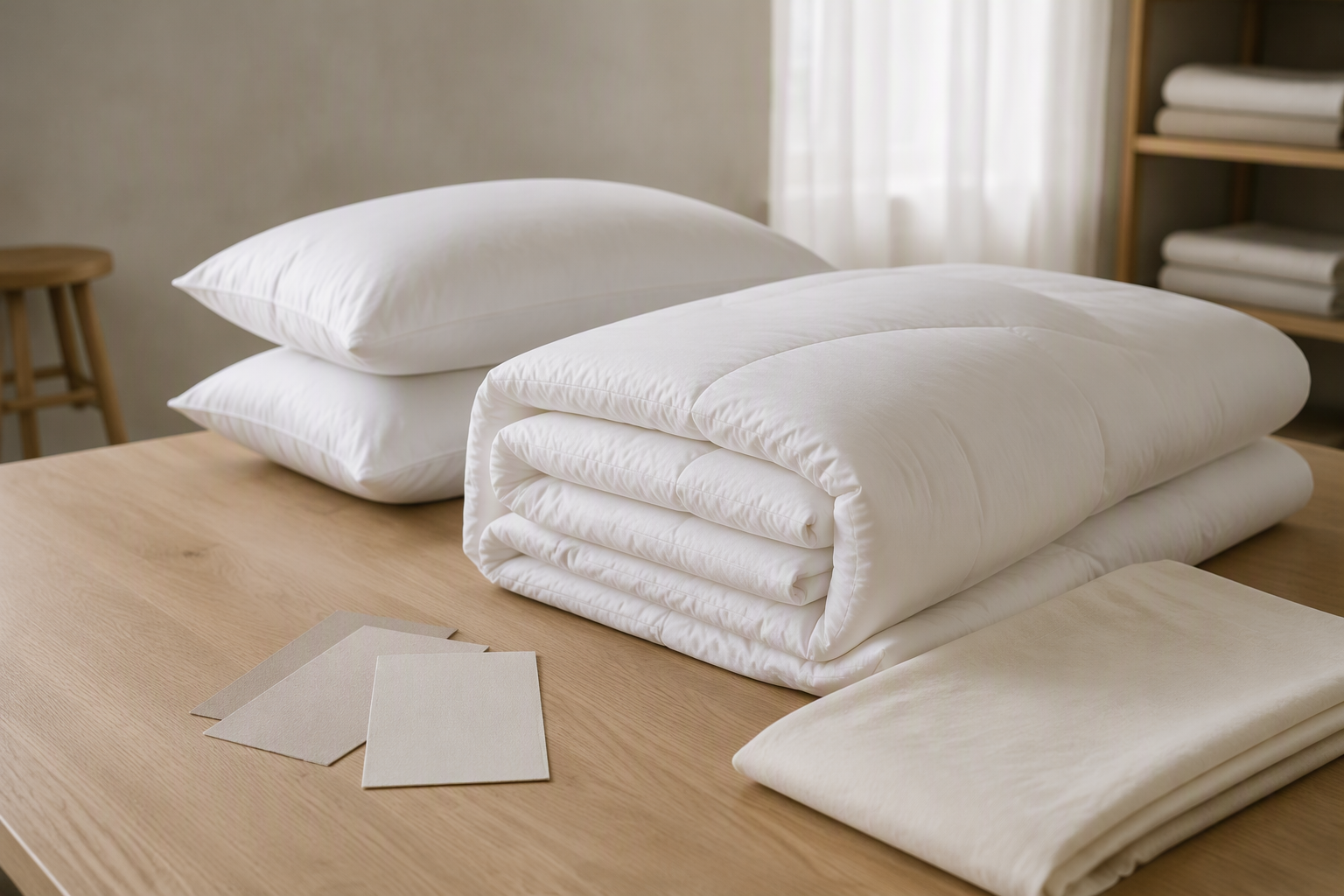
Short answer: a bedding factory's minimum order quantity is a cost calculation, not a company policy, so you negotiate it by changing the cost inputs rather than by arguing for a discount on volume. Seven levers do most of the work: (1) raise order value instead of order quantity, (2) combine sizes and colours into one mixed purchase order, (3) commit to a repeat schedule, (4) accept a longer lead time and slot into an existing production run, (5) use stock fabric and stock fill instead of a custom development, (6) pay a transparent small-order surcharge, and (7) buy a paid trial order first. Come with a specification sheet, ask the supplier which cost is setting their number, and get the agreed MOQ, surcharge and delivery terms in writing.
Most buyers treat MOQ as a wall. It is closer to a price tag: below a certain quantity the factory cannot spread its fixed costs, so either the order does not happen or the buyer covers the difference another way.
Why Do Bedding Factories Set a Minimum Order Quantity at All?
MOQ exists because bedding is assembled from components that each carry their own minimum. A duvet is not one purchase; it is a shell fabric order, a fill order, a label and packaging order, plus cutting, sewing, filling, inspection and packing time.
Fabric is usually the real constraint. A mill will not weave or dye a custom shell in your exact colour and construction for a few hundred metres. The minimum dye lot sits upstream of the factory, which passes it downstream as a piece MOQ. Changing the fabric choice often moves the MOQ more than any negotiation tactic will.
Fill is the second constraint. Down is bought and processed in lots that cannot be split for a small run. Synthetic fill carries lower lot minimums, which is one structural reason synthetic bedding MOQs sit below down bedding MOQs.
Then come the fixed production costs: cutting table setup, machine changeover, calibration for a specific construction, and the QC time to inspect a batch properly. These are incurred once per run, which is why a factory prefers one large run over three small ones.
Anhui Comfytouch Ltd has run its own bedding factory in Hefei, Anhui for more than 20 years, producing 10,000 to 20,000 pieces a day for customers including Lidl and Aldi. From the manufacturing side the question is always the same: how do we recover the setup cost of this run without pricing the buyer out?
What Is Driving the Number the Supplier Quoted?
Ask directly: "Which of these is setting the MOQ — the fabric, the fill, the packaging, or the setup?"
| MOQ driver | Why it creates a floor | Can a buyer change it? |
|---|---|---|
| Fabric minimum dye lot | Custom colour or construction must be woven and dyed in one batch | Yes — switch to stock fabric or a stock colour |
| Fill lot size | Down and synthetic fill are processed and reserved in lots | Partly — synthetic fill has lower lot minimums |
| Custom label and packaging | Printed care labels and cartons carry their own print minimums | Yes — use stock labels or share a print run |
| Cutting and machine setup | A one-time cost per construction and size | Yes — consolidate sizes into one run |
| QC and inspection time | A per-batch cost, not a per-unit cost | No — but it can share a scheduled window |
| Certification chain of custody | Certified fill must stay segregated through the run | No — never trade this away |
How Is MOQ Usually Expressed in Bedding Quotations?
Two suppliers can quote "MOQ 500" and mean very different things, so convert the quote into a common unit before comparing.
| How MOQ is expressed | What it means for you | What to ask for instead |
|---|---|---|
| Per purchase order | One total across the order — the most flexible form | Confirm mixed sizes and colours count toward it |
| Per size | 500 per size means 2,000+ pieces across four sizes | Ask for a blended MOQ across the size range |
| Per colour | Each colourway carries its own minimum | Ask for a mixed-colour order at a small surcharge |
| Per material or construction | Down and synthetic fill cannot share one minimum | Accept it — the fill lot constraint is real |
| Per shipment | A large order shipped in instalments | Useful for cash flow — ask for a delivery schedule |
What Should You Prepare Before the First MOQ Conversation?
Preparation is the cheapest lever available.
A specification sheet — product type, size in centimetres, fabric composition and thread count, fill type, fill power, fill weight, construction, stitching density, colour and packaging.
Volume by SKU, not one total — a supplier can often hold a low minimum on a slow-selling colour if the core colour carries the run.
Your target landed cost, not only your FOB price. Freight and duty change which MOQ is actually cheaper.
Your delivery window and how flexible it is — flexible timing is worth real money to a factory.
Market requirements — care label language, origin text, and any certification your market demands.
A trial-order willingness statement. "300 now, 3,000 after approval" is heard very differently from "300".
Which Levers Actually Move the MOQ?
Ranked from lowest to highest cost to you.
1. Raise order value instead of order quantity
A factory's constraint is revenue per run, not unit count. If you cannot take 2,000 pieces of one duvet, ask whether 1,200 across two higher-value constructions satisfies the same run.
2. Build a mixed purchase order
Combine sizes, colours and even adjacent product families into one order with one delivery date. One run of 800 pieces across four sizes costs far less setup than four runs of 200.
3. Commit to a repeat schedule
Offer a written volume commitment across twelve months with a firm first instalment. A schedule converts a one-off small order into a run the factory can plan around.
4. Accept a longer lead time
Flexible timing lets the factory attach your order to an existing production slot instead of opening a new one. If your stock position allows four to six weeks instead of a fixed date, trade that flexibility for a lower MOQ.
5. Use stock fabric and stock fill
The fastest route to a low MOQ is to stop customising the inputs. Stock white downproof cotton and standard fill specifications remove the dye-lot and development minimums entirely. Keep custom colours for the second order.
6. Pay a transparent small-order surcharge
If the factory genuinely cannot go lower without losing money, a stated surcharge is a fair outcome. Ask for it itemised and for it to be waived or credited on a follow-up order above MOQ.
7. Buy a paid trial order
Many factories accept a small chargeable trial run from a new buyer: you pay a premium per piece and receive real production output instead of a sample-room piece. Treat the premium as the cost of de-risking. Comfytouch works this way with new buyers, so fill, construction and packing are verified before a full run.
What Should You Never Trade Away to Get a Smaller MOQ?
Fill specification — fill type, fill power, fill weight and down-to-feather ratio.
Fabric downproofing — feather migration through a cheapened shell is the most common failure in discount down bedding.
Certification continuity — if your market requires OEKO-TEX Standard 100, Responsible Down Standard (RDS) or IDFL-tested fill, the certificate must cover the trial run too.
A signed production sample — approved in writing, sealed, and retained by both parties.
Labelling and documentation — care label content, origin text and export paperwork.
Comfytouch holds BSCI, RDS, Downpass, GRS and OEKO-TEX Standard 100 certification, and we issue certificate numbers with quotations so buyers can verify scope and validity independently.
How Do You Put an MOQ Agreement in Writing?
Verbal flexibility disappears at the first production meeting. Confirm all of this in the purchase order or a signed annex:
MOQ per SKU and in total, with the exact definition of what counts toward it.
Surcharge amount, the quantity at which it disappears, and how long the offer stands.
Unit price at the trial tier and at the full-MOQ tier.
Lead time with a stated start point — production start date, not "from order".
Sample approval record, delivery schedule and quality terms, including acceptable tolerance on size and fill weight.
Frequently Asked Questions About Bedding MOQ
Is a minimum order quantity negotiable?
Usually yes, but not by asking directly. MOQ reflects fixed costs — fabric dye lots, fill lots, packaging print minimums and machine setup — so it moves when you change those inputs. Stock fabric, a mixed purchase order, flexible timing or a stated surcharge shifts the number more reliably than a request for a lower minimum.
Why is custom bedding's MOQ so much higher than stock bedding's?
Because customisation multiplies the minimums. A custom colour adds a fabric dye-lot minimum, a custom construction adds machine setup, and custom packaging adds a print minimum — each incurred once per run regardless of order size. Stock white bedding in a standard construction carries only the production floor.
Can I combine different sizes or colours into one minimum order?
Often yes, and it is one of your strongest levers. Ask explicitly whether the quoted MOQ is per size, per colour or per purchase order, because a per-colour figure across six colourways is a six-times larger commitment. A blended minimum across a size range is reasonable; a blended minimum across different fill types is not, because fill lots cannot be combined.
Does a low MOQ mean lower quality?
Not inherently, but it changes the economics. A factory accepting a small run must recover setup cost somewhere, so the trade is usually a higher unit price, a stock specification, a longer lead time or fewer material choices. Quality problems begin when a low MOQ is met by quietly downgrading the fill or the shell instead.
Should I pay for a sample if I plan to place an order?
Yes. A charged sample is normally built on production materials or the production line, which makes it a far better predictor of bulk quality than a free sample-room piece, and many suppliers credit the cost back against the first order. Ask for that in writing.
What if my retail customer requires certification but my volume is small?
Certification attaches to the article, not the order size, so a trial run still needs certified fill and certified finishing. Confirm that the certificate scope covers your exact product and quantity, and request the certificate number rather than a logo. If a supplier cannot provide a coverable certificate on a small run, that is a real constraint to plan around — not something to negotiate away.
What Is the Best Way to Start a Small Bedding Order?
Come with a specification sheet, a realistic volume split by SKU, and a delivery window you can flex. Then ask which cost is setting their MOQ and trade against that cost — timing, materials, packaging or a stated surcharge — rather than against the number itself. Keep fill, shell fabric and certification fixed, and confirm everything in writing before production starts.
Comfytouch manufactures down Comforters, Silk bedding, synthetic fill comforters, pillows, mattress pads and Protectors, and complete Bedding sets for hotels, retailers and brands across Japan, Germany, the UK, the Nordics, North America and South America, as an ODM and OEM partner.
Ready to price your first order? Send us your specification sheet, your target market and your volume — even a trial quantity — and we will reply with MOQ options, certificate numbers and fill test reports within one business day.
Sources and Further Reading
Related Photo
Silk Bedding Sets: What to Ver
What to verify before ordering silk bedding sets: configuration, shade
Silk Pillowcases for Hotels: M
How hotels specify silk pillowcases: weave, momme, closure and seam co

Goose Down and Duck Down Duvet
How to compare down duvets on fill power, fill weight and construction
Goose Down vs Duck Down Pillow
Goose down vs duck down pillows compared on loft, fill weight, constru

Duck Down and Feather Mattress
What hotels should specify in a down and feather mattress topper: fill
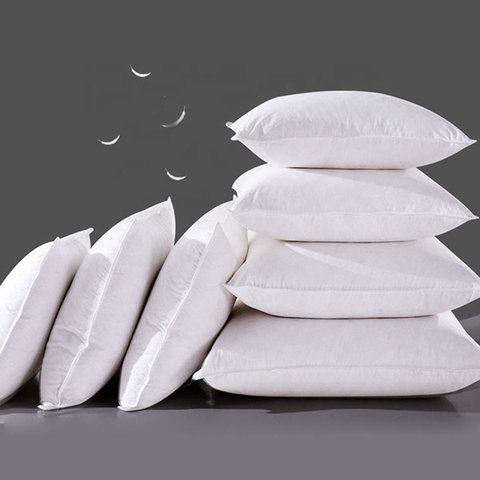
How to specify duck feather cushion cores for upholstery and hotel pro
Categories
Latest News
- Comfytouch at the 140th Canton Fai2026-10-09
- Comfytouch Bedding Heads to EQUIPO2026-09-02
- Heimtextil 20262026-01-14
- Join us in Frankfurt {13 to 16 Jan2025-11-11
- The 138 th canton fair in guanzhou2025-11-11


 Email
 WhatsApp
 WeChat
 Phone