

BLOG
Why Memory Foam Pillows Are a Game-Changer for Better Sleep?
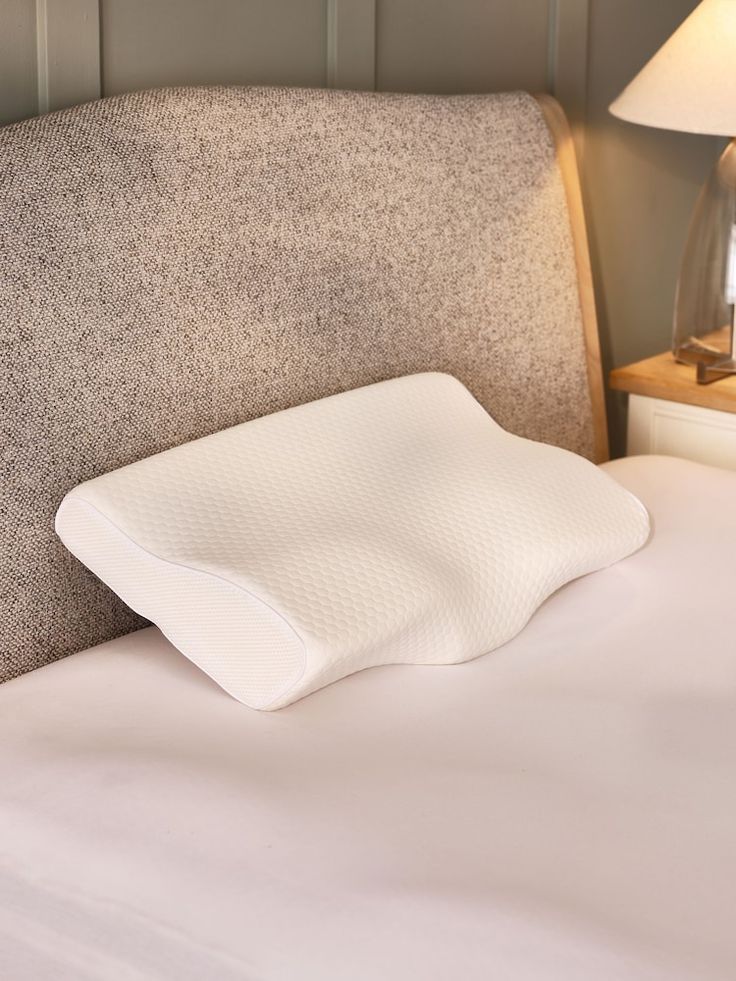
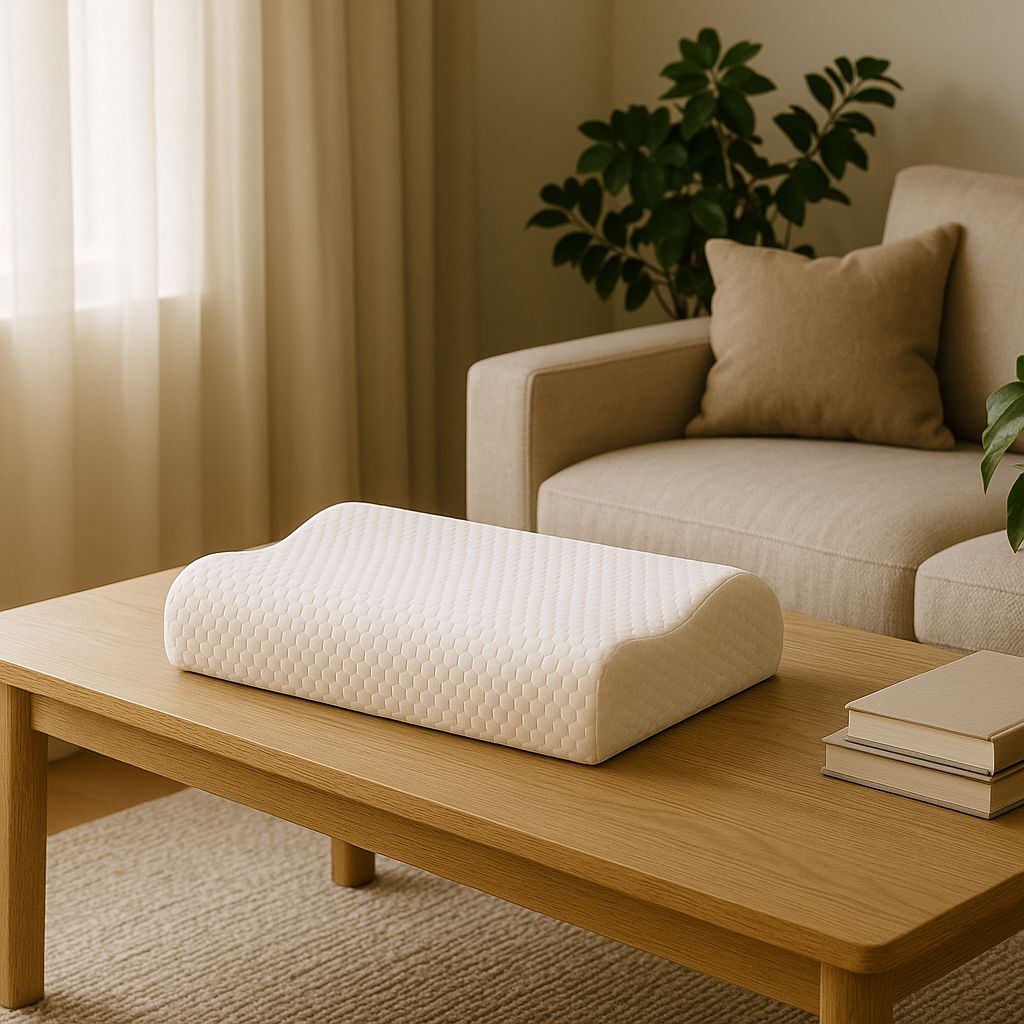
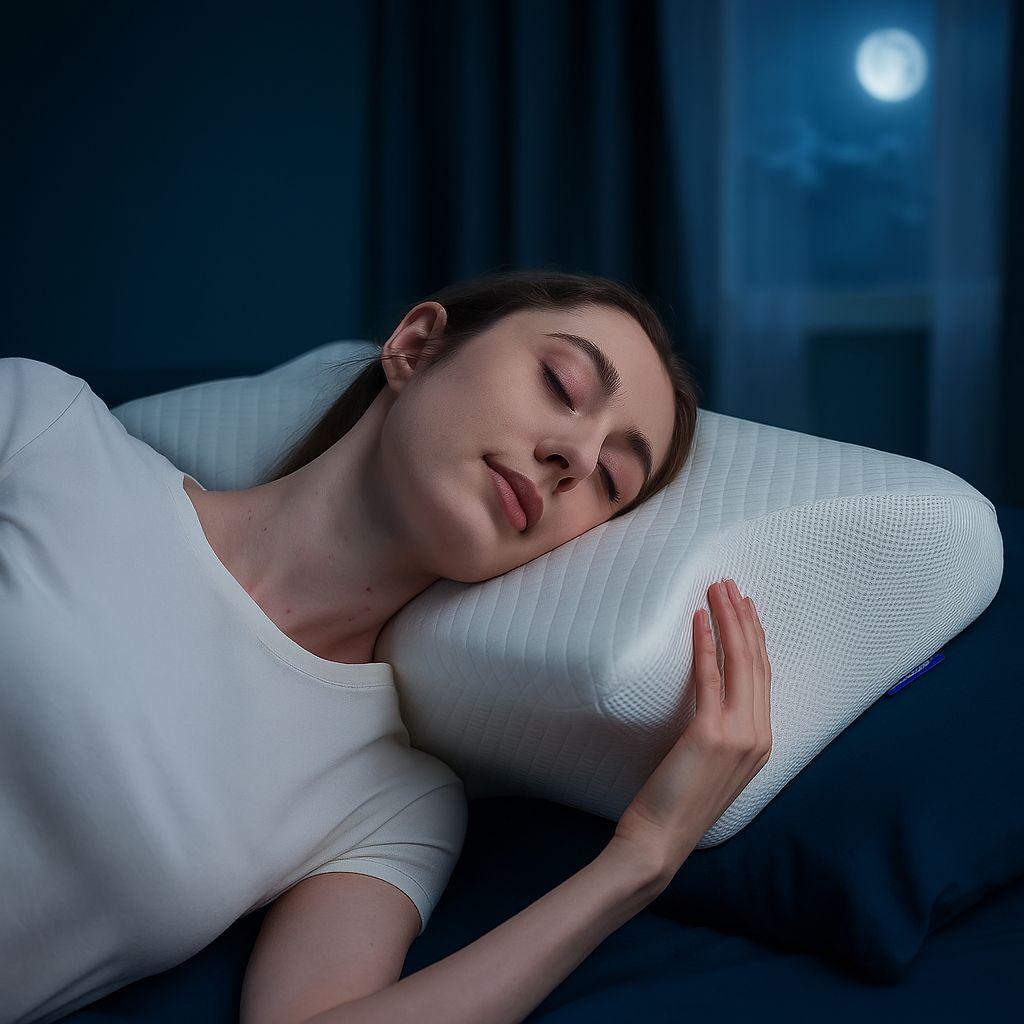
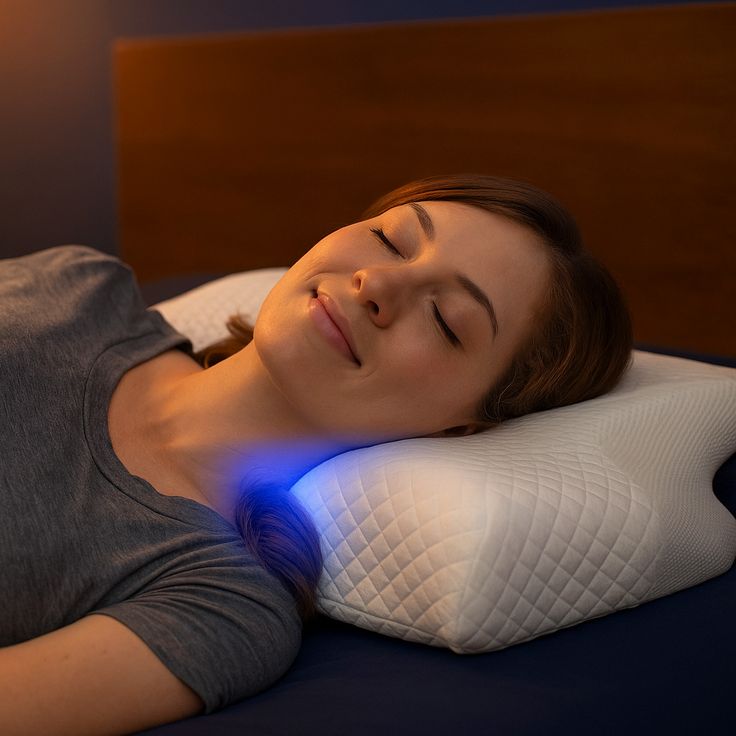
A memory foam pillow holds the shape of the head and neck instead of pushing back against them, so the load is spread across the whole contact area rather than concentrated at a few high points. That single mechanical difference is what produces the effects people describe as a game-changer: less pressure at the jaw and ear, fewer pillow adjustments during the night, and a neck that stays in the line the spine wants.
This guide covers how the material behaves, what density and firmness actually control, and what a buyer should check before placing an order — including the two failures that account for most returns.
What Makes Memory Foam Different From Fibre Fill?
Fibre and down pillows support by displacement: the fill moves away from the heaviest point and settles around it, which is comfortable but means the pillow has to be reshaped when the sleeper turns. Memory foam is viscoelastic — it deforms under load and returns slowly, so it distributes pressure and then recovers its shape without being plumped.
The practical difference shows up in the middle of the night. A fibre pillow under a side sleeper's shoulder creates a high point that the head then rolls away from; a foam pillow compresses locally and keeps the head where it was placed. For anyone who wakes with a numb arm or a stiff jaw, the mechanism is usually pressure concentration rather than the pillow being too soft or too firm.
The material is not automatically better for everyone. Stomach sleepers need a very low profile, and some people simply dislike the slow recovery. A pillow is a fit problem, and foam is one of several materials that can solve it.
How Does It Change Support for the Head and Neck?
Support comes from the combination of shape and height, not from the material name. The same foam in three shapes produces three different pillows.
| Sleeping position | What the neck needs | Shape direction | What to avoid |
|---|---|---|---|
| Back sleeper | Neutral curve, chin neither up nor down | Contoured profile with a shallow centre | Deep contour that pushes the chin forward |
| Side sleeper | Height equal to shoulder width | Higher profile, or a shaped side channel | A low pillow that lets the shoulder collapse |
| Stomach sleeper | Almost no height at the head | Very low profile, or no pillow | Any contoured shape, which lifts the chin |
| Combination sleeper | Changes through the night | Mid-height with a soft shoulder zone | A rigid contour that only fits one position |
The height question is settled by measurement, not by preference alone: lie on the pillow and check whether the ear sits roughly above the shoulder. If the head tilts down, the pillow is too low; if the chin is pushed towards the chest, it is too high.
What Do Density and Firmness Actually Control?
Density and firmness are different properties and buyers routinely treat them as one. Density is how much material is packed into a given volume, usually expressed in kilograms per cubic metre, and it is the better predictor of how long the pillow will hold its shape. Firmness is how the foam feels under a hand or a head, and it can be adjusted independently through the foam's formulation and structure.
The consequence is that a high-density, soft-feeling foam and a low-density, firm-feeling foam are both possible, and they behave differently over a year of use. Ask for both figures, and ask for the test method behind the firmness number, or the number means nothing across suppliers.
Firmness should then be matched to the sleeper, not to the market. A soft foam for a back sleeper with a shallow contour, a firmer foam for a side sleeper who needs to stay lifted — the same pillow delivered in two firmnesses is often the simplest way to cover a room mix.
Why Do Some People Find Memory Foam Too Warm?
Traditional memory foam is closed-cell: air does not move through it, so heat from the head accumulates and the surface warms up. For a sleeper who already runs warm, that is the one complaint that outweighs the support benefit, and it is the main reason foam pillows get returned.
There are three workable answers. Open-cell foam allows air to move through the material and is the structural fix. Gel infusions spread heat sideways rather than letting it sit under the head, and they help without solving the underlying airflow. A breathable knit cover is the cheapest improvement and the easiest to specify, because the cover is the layer in contact with the skin.
For a hotel or a warm market, specify the combination rather than one feature: an open-cell foam, a breathable cover, and a firmness that keeps the head high enough for air to move. Buyers comparing this with fibre fill can read the fabric side of the question in our guide to how bedding affects sleep quality.
How Long Does It Last, and How Is It Maintained?
A foam pillow does not need plumping and does not compress into lumps the way fibre does, so its service life is set by how well the foam recovers and how clean the cover stays. Expect the recovery to slow gradually rather than fail suddenly; the sign is a pillow that no longer springs back fully after a night's use.
Maintenance is simple and should be written into the care label. The foam core is spot cleaned and aired, never machine washed, because water inside a closed-cell block does not dry out and the foam crumbles. The cover is the washable part, which is why a removable, washable cover is worth specifying even when it adds cost — it is the difference between a pillow that lasts and one that gets thrown away for hygiene reasons.
What Should a Buyer Check Before Ordering?
- Foam density in kilograms per cubic metre, and the firmness figure with its test method
- Cell structure, and whether the grade is open-cell for warmer markets
- Profile and height, matched to the sleeping positions the product will serve
- Cover fabric, removable or fixed, and how it is laundered
- Certification for the finished article, including the cover and any gel layer
- Compression packing method, and the recovery time after unpacking
- Tolerance on the profile dimensions, since a contour that is cut short loses its support
The certification point deserves care. OEKO-TEX Standard 100 tests the finished article rather than the raw foam, which means the cover, thread and any added layer are all inside the scope. Ask whose certificate covers the article you are buying. Where a figure matters to your programme, we confirm it against the batch test report on request.
How Does Comfytouch Produce Memory Foam Pillows?
Comfytouch is the bedding brand of Anhui Comfytouch Ltd, an OEM and ODM manufacturer in Hefei, Anhui, with its own factory and two lines: home bedding and hotel bedding. Memory foam pillows are quoted by profile, height and firmness against the sleeping positions a buyer is serving, with the cover specified at the same time, for customers in Europe, North America and South America.
Our certifications are: OEKO-TEX Standard 100 No. 21.HCN.83824 | ISO 9001:2015 No. ECI22Q00239R1S | ISO 14001:2015 No. ECI22E00129R1S | BSCI copy on request.
Current profiles are grouped on our memory foam pillow range, with individual specifications on the memory foam pillow product page and a shaped option in the contour memory foam pillow. For the material background, the reference entry on memory foam covers how viscoelastic polyurethane behaves, and buyers comparing constructions for contract projects usually do it at Heimtextil.
Frequently Asked Questions About Memory Foam Pillows
Is a memory foam pillow better than a down pillow?
They solve different problems. Foam distributes pressure and holds the head in place, which suits people who wake with neck or jaw discomfort. Down is softer, cooler and easier to reshape, which suits people who move a great deal and dislike a fixed profile. Neither is universally better.
Why does my memory foam pillow feel harder in winter?
Viscoelastic foam stiffens as it cools, so the same pillow feels firmer in a cold room and softer in a warm one. It softens within minutes of contact with the head; if it stays hard, the grade is probably too dense for the room it is used in.
Can I wash a memory foam pillow?
Not the foam. Wash the cover and spot clean the core, then air it in a dry room away from direct sun. Water trapped inside the foam does not dry out and will break the material down.
How long should a memory foam pillow last?
It depends on density and on how well the cover is maintained. The signal to replace is a pillow that no longer recovers its shape overnight, rather than a fixed number of years.
Do memory foam pillows help with snoring?
They can help where the cause is the head being pushed into a position that narrows the airway, because a contoured profile keeps the chin from dropping towards the chest. They do nothing for snoring caused by nasal blockage or weight, and no pillow should be sold as a treatment.
What is the difference between open-cell and closed-cell foam?
Closed-cell foam traps air and heat inside the block, so the surface warms up under the head. Open-cell foam lets air move through the material, which keeps the surface cooler at the cost of a slightly different feel and often a higher unit cost.
Specify the Profile, Not Just the Material
Send us the sleeping positions the pillow will serve, the room temperature it will be used in, and how the cover will be laundered, and we will confirm which profile, height and firmness fits that brief before a sample is cut. If a property needs one pillow for a mixed room, we will quote two firmnesses rather than a compromise.
Write to info@comfytouch.cn with your sizes and the firmness levels you sell, and we will reply with the profile options and cover choices for your programme.
Related Photo
Silk Bedding Sets: What to Ver
What to verify before ordering silk bedding sets: configuration, shade
Silk Pillowcases for Hotels: M
How hotels specify silk pillowcases: weave, momme, closure and seam co
Goose Down and Duck Down Duvet
How to compare down duvets on fill power, fill weight and construction
Goose Down vs Duck Down Pillow
Goose down vs duck down pillows compared on loft, fill weight, constru
Duck Down and Feather Mattress
What hotels should specify in a down and feather mattress topper: fill
How to specify duck feather cushion cores for upholstery and hotel pro
Categories
Latest News
- Comfytouch at the 140th Canton Fai2026-10-09
- Comfytouch Bedding Heads to EQUIPO2026-09-02
- Heimtextil 20262026-01-14
- Join us in Frankfurt {13 to 16 Jan2025-11-11
- The 138 th canton fair in guanzhou2025-11-11


 Email
 WhatsApp
 WeChat
 Phone