

BLOG

How Bedding Affects the Quality of Your Sleep?
Bedding affects sleep quality through two mechanisms only: how much heat and moisture it traps, and how much friction it creates against the skin. Everything else a duvet or sheet is sold on — finish, colour, brand story — changes how the bed looks rather than how the night goes.
This guide is about matching fabric and fill to the person sleeping under them. If you are setting up a room from scratch, the light, noise and air side of the question is covered in our guide to creating a sleep environment at home; here the subject is the surface.
What Does Bedding Actually Change About Sleep?
The body cools slightly as it falls asleep and warms again towards morning. Bedding either cooperates with that curve or fights it. A duvet that traps too much heat pushes the sleeper to throw a leg out, then to pull the cover back at 4 a.m.; a sheet that holds moisture against the skin produces the cold-then-damp sensation that wakes light sleepers.
Friction is the second mechanism and the one most often ignored. Every time a pillowcase drags against hair or a pyjama seam catches on a sheet, the sleeper makes a small adjustment. Most of those adjustments pass unnoticed, but each one is an opportunity to surface, and a night of them leaves the impression of having slept badly without any single cause to point at.
What bedding cannot do is compensate for a room that is too warm, too bright or too noisy. It is a fine-tuning layer, not a fix.
How Do You Match a Fabric to How You Sleep?
The useful question is not which fabric is better but which fabric suits this sleeper in this room. Start from how the person runs at night.
| Sleeper type | What goes wrong | Fabric direction | Fill direction |
|---|---|---|---|
| Runs hot | Wakes sweaty, kicks the cover off | Open, breathable weave; cotton or linen face | Lighter fill, or a summer-weight duvet used year round |
| Runs cold | Wakes with cold shoulders and feet | Closer weave that holds still air | Heavier fill, or two layers that can be split |
| Sensitive skin | Itching, redness along seams and hems | Smooth filament surface; few loose fibre ends | Any fill, but a tight down-proof shell matters more |
| Moves a lot | Cover bunches, pillow migrates | Fabric with a little body rather than a slick finish | Chambered construction that keeps fill in place |
| Shares a bed | One person too warm, one too cold | Two single Duvets on one bed | Different weights, same fabric family |
Two people in one bed with one duvet is a specification conflict, not a comfort preference. The honest solution is a pair of single duvets in matching fabric, which lets each side be weighted separately and is standard practice in much of northern Europe.
Why Does Breathability Matter More Than Warmth?
Warmth is easy to add and easy to overshoot; breathability is the property that decides whether the warmth you added stays comfortable. A fabric that moves moisture away from the skin and lets it evaporate keeps the microclimate under the duvet stable. A fabric that holds it produces the clammy patch that wakes people at the point in the night when body temperature is already rising.
Weave matters more than fibre here, which is why two cotton sheets can behave differently. A tight, densely woven fabric blocks air movement; a more open weave with a similar fibre content breathes better. If you are comparing suppliers, ask for fabric weight in grams per square metre — the method is described in ASTM D3776/D3776M — and treat a heavier number as warmer and usually less breathable at the same fibre.
What Do Fill Weight and Loft Change?
Fill weight sets warmth; loft sets how the duvet sits on the body. A duvet can be light and warm if the fill lofts well, or heavy and only moderately warm if it does not, which is why the two numbers belong on the label together.
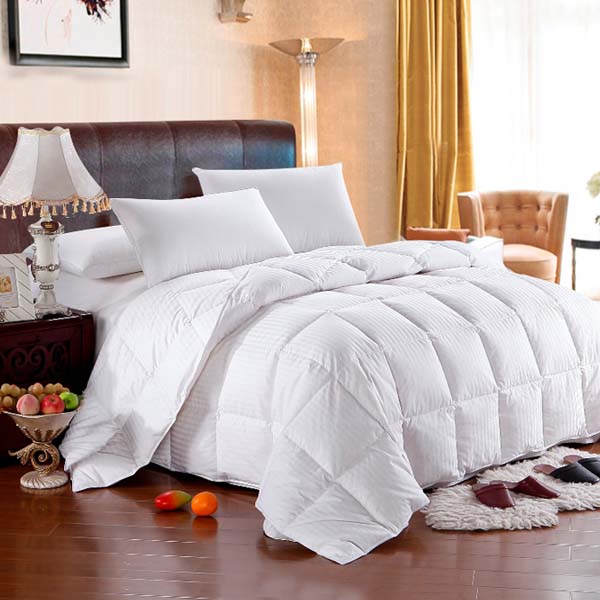
The practical consequence is that the same nominal fill weight feels different depending on how the duvet is constructed. A sewn-through duvet has cold lines where the shells are stitched together; a baffled duvet holds full loft across the panel. For a sleeper who runs cold, the baffled build does more for comfort than an extra layer of fill in a sewn-through one.
Pillows follow the same logic with a different target. Height and support matter more than fill weight, because the head and neck need a neutral line rather than warmth. If you are choosing between foam and fibre for support rather than for temperature, the trade-offs are set out in our guide to memory foam pillow benefits.
Which Fibres Suit Sensitive Skin?
Skin reacts to friction, to residue and to heat, so the useful criteria are a smooth surface, a tight weave and a fibre that can be washed hot enough to remove detergent residue.
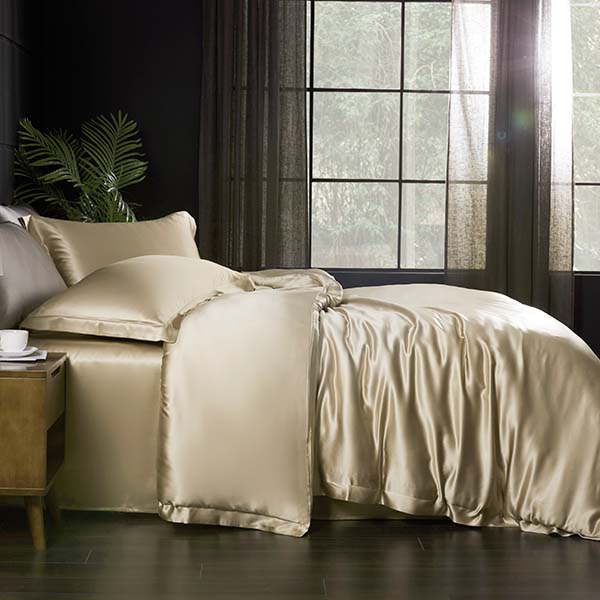
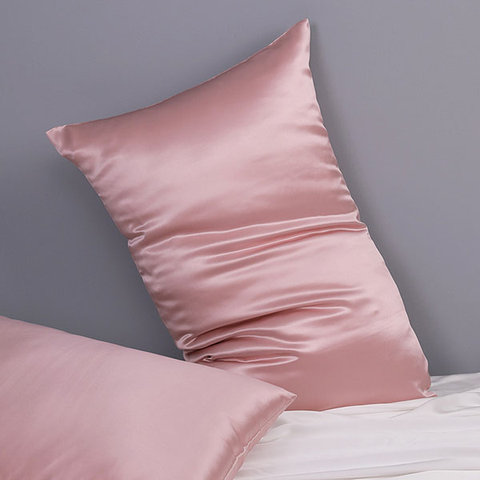
Filament fibres — Silk above all — present a continuous surface with almost no loose ends, which is why silk pillowcases are specified for people who wake with creases on the face or breakage along the hairline. The trade-off is care: silk needs a gentle wash and a cool iron. Microfibre presents a fine, dense surface at a much lower cost and washes without ceremony, which is why it is common in hotel bedding and in family homes. Cotton sits between the two: breathable, washable at higher temperatures, and dependent on weave quality rather than on the fibre alone.
Whichever fibre is chosen, the shell on the duvet matters as much as the sheet. A loose shell lets fill migrate and lets dust through; a tight down-proof shell keeps the fill where it was put. Current ranges are grouped by fibre rather than by cost tier on our Bedding sets page, with the microfibre option in microfibre bedding sets and the filament option in silk bedding sets.
What About Protectors and Pillows?
A protector is the one layer that changes the hygiene of the bed rather than its feel, and it is the layer most often left out when people shop for comfort. A washable protector under the sheet means the sheet can be light and breathable while the mattress stays clean, and it lets the whole surface be refreshed between guests or between seasons.
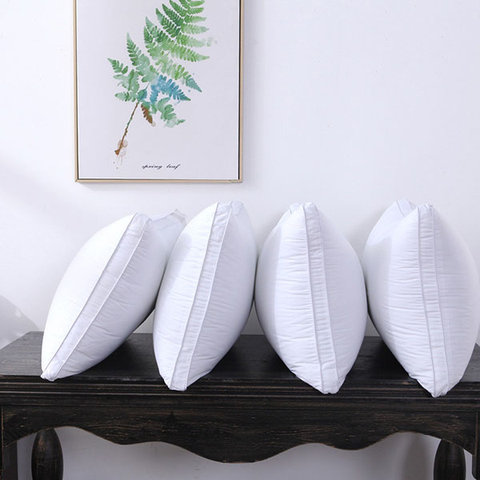
Pillows deserve the same matching exercise as the duvet. A flat pillow suits a stomach sleeper and punishes a side sleeper; a deep gusseted pillow does the reverse. Buy the pillow for position first, then for fill.
What Should You Look for on the Label?
- Fibre content by percentage, named as fibres rather than as weaves
- Fabric weight in grams per square metre, so two products can be compared honestly
- Fill weight, and whether it refers to the whole duvet or per unit area
- Shell construction, and whether it is described as down-proof
- Care instructions that match how the item will actually be washed
- Certification tied to the finished article, not to the factory
The fibre-content point is the one that catches buyers out. A satin sheet is defined by its weave, not its fibre, and polyester satin is a different product from silk satin at every level except appearance.
How Does Comfytouch Approach Fabric Selection?
Comfytouch is the bedding brand of Anhui Comfytouch Ltd, an OEM and ODM manufacturer in Hefei, Anhui, with its own factory and two lines: home bedding and hotel bedding. Buyers usually arrive with a fibre in mind and a laundry routine already fixed by the property, so we quote fabric and fill against the sleeper and the wash cycle rather than against a season label, for customers in Europe, North America and South America.
Our certifications are: OEKO-TEX Standard 100 No. 21.HCN.83824 | ISO 9001:2015 No. ECI22Q00239R1S | ISO 14001:2015 No. ECI22E00129R1S | BSCI copy on request.
Two references help when comparing specifications. OEKO-TEX Standard 100 explains what is tested on a finished article and why skin-contact products carry stricter limits, and buyers specifying for contract projects generally review constructions at Heimtextil before choosing a fabric family.
Frequently Asked Questions About Bedding and Sleep Quality
Does thread count tell me whether a sheet will sleep cool?
Not on its own. Thread count describes how many threads are packed into a given area, and a very high count can mean finer, denser yarns that breathe less. Weave openness and fabric weight are better guides to how a sheet will feel overnight.
Is a heavier duvet always warmer?
Usually, but not reliably. Warmth depends on how much still air the fill traps, which is why a light, high-loft duvet can be warmer than a heavier, flatter one. Compare fill weight and construction together rather than weight alone.
Why do I wake up cold in the middle of the night?
Often because the bedding trapped heat early in the night and the body cooled later against a damp surface. A breathable fabric and a lighter fill usually help more than adding another layer.
Are silk pillowcases worth it for sensitive skin?
They present a smooth surface with very few loose fibre ends, which reduces friction. The cost is in care: silk needs a gentle wash and careful drying. A fine microfibre gives some of the same smoothness at a lower cost and a much simpler wash routine.
Should couples share one duvet?
If they sleep at different temperatures, no. Two single duvets in the same fabric let each side be weighted separately, and the bed still looks made because the covers match.
How often should bedding be replaced?
When the fabric thins at the stress points or the fill stops recovering after washing. Elastic that no longer grips and seams that pull are the practical signals, and they usually appear before the fabric looks worn.
Match the Bedding to the Sleeper, Not to the Season
Tell us how the person sleeps — runs hot or cold, sensitive skin or not, side sleeper or back — and how the bedding will be laundered, and we will recommend a fabric and fill combination for that brief. If two people share a bed with different needs, say so, and we will quote a pair of single duvets in matching fabric.
Write to info@comfytouch.cn with your sizes and the wash routine, and we will reply with the fabric, weight and construction options that fit.
Related Photo
Silk Bedding Sets: What to Ver
What to verify before ordering silk bedding sets: configuration, shade
Silk Pillowcases for Hotels: M
How hotels specify silk pillowcases: weave, momme, closure and seam co
Goose Down and Duck Down Duvet
How to compare down duvets on fill power, fill weight and construction
Goose Down vs Duck Down Pillow
Goose down vs duck down pillows compared on loft, fill weight, constru
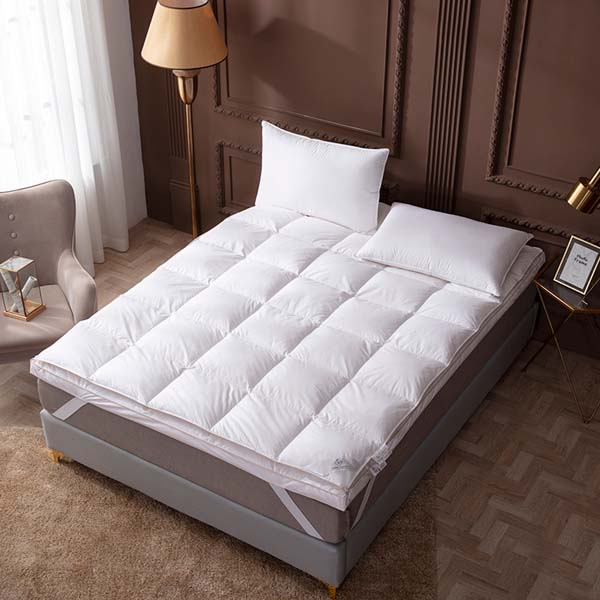
Duck Down and Feather Mattress
What hotels should specify in a down and feather mattress topper: fill
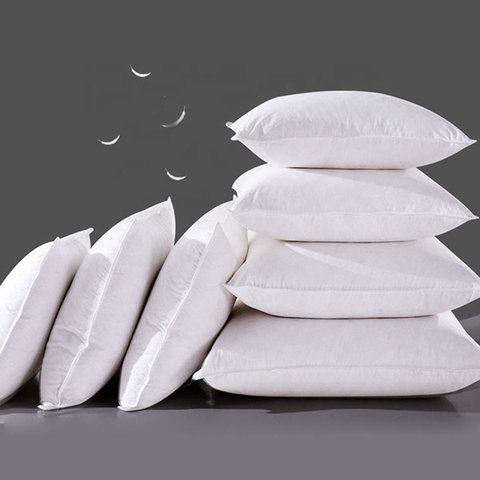
How to specify duck feather cushion cores for upholstery and hotel pro
Categories
Latest News
- Comfytouch at the 140th Canton Fai2026-10-09
- Comfytouch Bedding Heads to EQUIPO2026-09-02
- Heimtextil 20262026-01-14
- Join us in Frankfurt {13 to 16 Jan2025-11-11
- The 138 th canton fair in guanzhou2025-11-11


 Email
 WhatsApp
 WeChat
 Phone