

BLOG

Hotel Bedding Procurement Checklist: 10 Things to Verify Before You Place a Wholesale Order
Ten checks decide whether a hotel bedding order arrives as specified or arrives as an expensive lesson. This is the list we work through when a buyer asks us to quote against an existing supplier, ordered by where money is actually lost.
What Should Be Locked in the Specification Before Price Is Discussed?
Five parameters must be written down before anyone quotes: fibre composition, yarn construction, fabric weight in GSM, finished dimensions with tolerance, and colour fastness rating. A price quoted without them is not a comparable price, it is a starting position.
Most quotation problems we see are not negotiation problems. They are specification problems: two suppliers quoting the same product name at very different prices, one against a light polyester-cotton and one against a heavier cotton percale. Our cotton Bedding sets are quoted on this basis, with GSM stated before price.
| Parameter | What to write in the RFQ | Why it moves the price |
|---|---|---|
| Fibre composition | Exact ratio, e.g. 100% cotton, or 60/40 cotton-polyester | Cotton content is the largest driver of both cost and hand feel |
| Yarn and construction | Percale or sateen, yarn count, ends and picks | Higher pick count raises weaving time and yarn consumption |
| Fabric weight | GSM plus the tolerance you will accept | GSM is the parameter most often quietly reduced between sample and bulk |
| Finished dimensions | Sewn size, not cut size, plus tolerance | Cut size hides shrinkage allowance and hem take-up |
| Colour fastness | Washing, rubbing and light, with the rating required | Poor fastness fails in the property's laundry, not in your warehouse |
Check 1 — a written specification sheet. If a supplier will not put composition and GSM on paper, the sample you approved and the bulk you receive are two different products. Ask for the spec sheet as a signed document attached to the quotation.
Check 2 — shrinkage allowance and tolerance. Confirm whether dimensions quoted are cut size or finished sewn size, and what shrinkage the fabric is tested to after commercial washing. A fitted sheet that fits at delivery and stops fitting after ten washes has not failed in your warehouse; it failed at specification.
Sizes belong in the same document, and they must be confirmed against the property's own bed list rather than a generic country chart. The reference below is a starting point for the RFQ conversation, not a substitute for the property's specification, because bedding cut size, pocket depth and shrinkage allowance are separate numbers a mattress dimension does not supply.
| Market | Typical hotel core size | Core dimensions (nominal) |
|---|---|---|
| US | Queen | 60 x 80 in (152 x 203 cm) |
| US | King | 76 x 80 in (193 x 203 cm) |
| US | Twin XL | 39 x 80 in (99 x 203 cm) |
| Europe | Double / Queen | 160 x 200 cm |
| Europe | King | 180 x 200 cm |
| Australia | Queen | 153 x 203 cm |
| Australia | King | 183 x 203 cm |
Check 3 — pocket depth and cut allowance. Ask for the finished pocket depth and confirm it clears the mattress plus any protector or topper the property uses. Hotels that run Protectors on every bed need deeper pockets across the whole order, not only on the topper line. Our own mattress toppers and pillow protectors are specified the same way, pocket depth first.
How Do You Compare Landed Cost Instead of Unit Price?
Compare landed cost per set and cost per commercial wash cycle, not FOB price per piece. FOB hides the two variables that decide your margin: fabric weight and packing density.
Landed cost is arithmetic, but it is arithmetic most buyers do after the price is already fixed. Do it before: unit price plus freight, insurance, duty, inland delivery and packing material, divided by the number of sets that actually fit in a container.
| Cost driver | How it is usually quoted | Where buyers get caught |
|---|---|---|
| Fabric weight | Bundled into piece price | GSM reduced between sample and bulk, price unchanged |
| Cut waste | Absorbed by the factory | Sizes outside standard fabric width raise consumption sharply |
| Packing | Per carton or per set | Compression bags cut volume but may crease the product |
| Freight density | Per CBM | Light bulky sets cost more per unit to ship than flat-packed ones |
| Duty and origin | Per HS code | A code that does not match the construction creates clearance risk |
Check 4 — landed cost per set, and cost per wash cycle. Divide landed cost by the number of commercial wash cycles the item is expected to survive, then compare that figure across suppliers. It is the only number that reflects what the property or the end customer is actually buying.
Check 5 — packaging and weight control for marketplace sellers. For Amazon and Shopify sellers the carton is part of the product. Confirm poly bag thickness, warning labels, carton marks, and whether the packing survives FBA receiving without rework. Ask for packed weight and carton dimensions early, because they set your shipping tier, not your supplier's.
What Evidence Should Come With a Compliance Claim?
Ask for a certificate number you can verify yourself, the test report behind it, and a batch test report for the specific shipment. A PDF with a logo and no number proves nothing.
Certification claims are the easiest place for a supply chain to drift, because the buyer often cannot read the label and the seller knows it. Three practical rules:
OEKO-TEX Standard 100. Bed linen sits in Product Class 2, products with direct skin contact, which carries stricter limits than Class 3 or 4. Take the certificate number and check it in the official label check rather than accepting a photograph of a label. The standard and its product classes are described on the OEKO-TEX Standard 100 page.
16 CFR 1633. This US flammability rule applies to mattress sets, and the regulation expressly excludes mattress pads and mattress toppers from its scope. If a supplier presents a topper as compliant with it, ask what the document actually covers. The scope is stated in 16 CFR Part 1633.
GOTS. For organic cotton programmes, request the scope certificate naming the specific fabric and the processing unit, then verify the licence in the GOTS certified suppliers database. A certificate covering a different fabric from the same group is not cover for your order.
Check 6 — certificates with numbers, verified independently. Write the certificate numbers into the purchase order, not only into an email thread.
Check 7 — commercial washing cycles with the test method attached. A wash cycle count means nothing without the method: temperature, detergent, ballast, and the appearance criteria used to fail the sample. Ask for the report, and ask which cycle definition it follows.
Check 8 — flammability and regulated-market requirements, stated correctly. Where a market regulates the finished item, the requirement attaches to that item and its declared composition, not to the fabric alone. Ask which standard applies to your product and get the report for that product.
Our own certificates, as they should be quoted in full: OEKO-TEX Standard 100 No. 21.HCN.83824 | ISO 9001:2015 No. ECI22Q00239R1S | ISO 14001:2015 No. ECI22E00129R1S | BSCI copy on request.
Where Do Timelines and Quality Actually Break?
They break at two points: approval of the lab dip and hand feel, and the final random inspection. Both get compressed at the end of a project that was already late, which is why they are the two stages worth protecting in the schedule.
Check 9 — a signed approval sample held by both sides. Every approval loop is a chance for the order to slip. Strike-off and lab dip, then a pre-production sample from the actual bulk fabric, then a signed golden sample kept by the factory and by you. When a dispute starts, this sample ends it.
Check 10 — inspection timing and who pays for a failed inspection. Inline checks catch size drift and seam faults while the line can still correct them; a final random inspection before packing catches what inline checks missed. Agree the acceptance level and the re-inspection cost in the order, and agree what happens to a failed lot.
For private label programmes, add artwork approval to the same gate. Woven labels, printed care labels and carton marks each need a signed proof before production, because a label reprint costs far more than the label.
Comfytouch runs OEM and ODM programmes from our own factory in Anhui, with automated cutting, inline QC and export packing for FBA and direct container shipments. Buyers who want to see the process before placing an order can request a factory audit report.
FAQ
What is the minimum order quantity for custom hotel bedding?
MOQ is quoted per construction and per fabric, because a stock fabric and a custom-dyed fabric carry different minimums. Ask for the MOQ in writing against your specification rather than as a general range, so the number you plan around is the number that applies to your order.
How long does a sample take?
Sample lead time depends on whether the fabric is in stock or needs dyeing, and on how many approval rounds the artwork needs. We quote it against your specification instead of publishing one figure that will not hold for a custom colour. Fabric weight and construction are confirmed against the batch test report on request or with sample.
What payment terms do you work on?
The deposit and balance split, and the trigger for the balance, are agreed per order and written into the purchase order. Fix the release condition in writing, whether that is a copy of the bill of lading or a telex release, so the term does not depend on interpretation later.
Can you produce under our own brand?
Yes. Woven labels, printed care labels, poly bags and cartons can all carry your brand, with artwork approved before production starts. Private label programmes follow the same approval gate as the fabric: nothing goes to the line without a signed proof.
Can you test to our wash cycle or flammability requirement?
Send the test method and the cycle count your programme requires and we will confirm what can be tested and what documentation comes with the shipment. Requirements defined by method are workable; requirements defined only by a marketing claim are not, and we will say so before quoting.
Request what you need to decide. Three things settle a sourcing decision faster than a price list. A factory audit report, sent before you commit to an order. A free fabric swatch card, so hand feel is compared against something physical rather than a photograph. And tiered bulk pricing quoted against your specification, with the volume breakpoints stated instead of one number that hides the ladder.
Send your specification sheet, target market and annual volume to info@comfytouch.cn or +86 18156986179, and we will reply with the specification gaps worth closing before quoting. That reply is useful whether or not you place the order with Comfytouch.
Related Photo
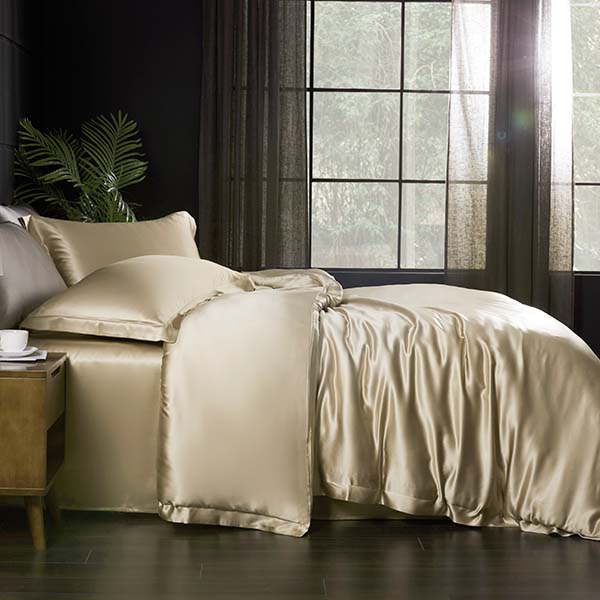
Silk Bedding Sets: What to Ver
What to verify before ordering silk bedding sets: configuration, shade
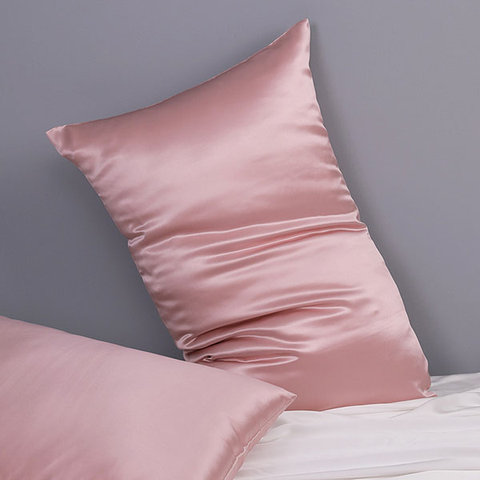
Silk Pillowcases for Hotels: M
How hotels specify silk pillowcases: weave, momme, closure and seam co
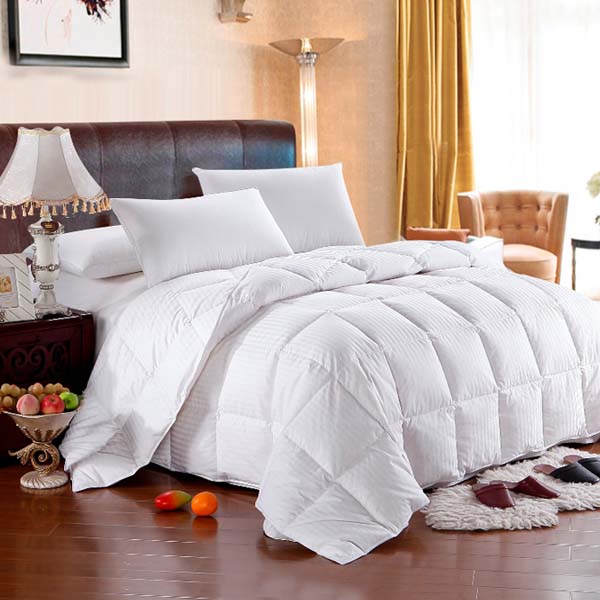
Goose Down and Duck Down Duvet
How to compare down duvets on fill power, fill weight and construction
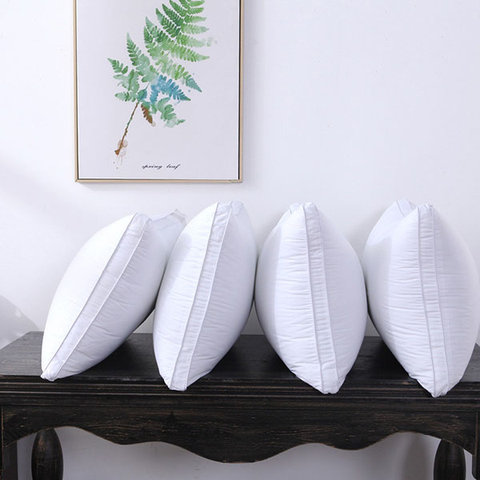
Goose Down vs Duck Down Pillow
Goose down vs duck down pillows compared on loft, fill weight, constru
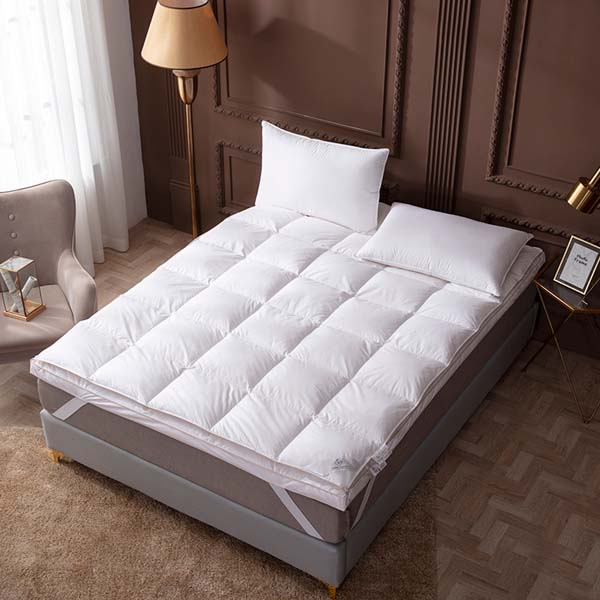
Duck Down and Feather Mattress
What hotels should specify in a down and feather mattress topper: fill
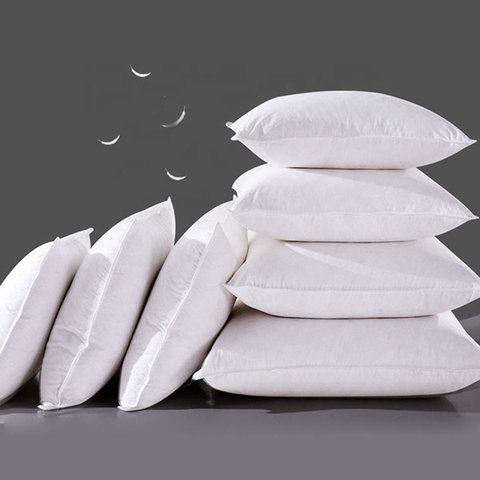
How to specify duck feather cushion cores for upholstery and hotel pro
Categories
Latest News
- Comfytouch at the 140th Canton Fai2026-10-09
- Comfytouch Bedding Heads to EQUIPO2026-09-02
- Heimtextil 20262026-01-14
- Join us in Frankfurt {13 to 16 Jan2025-11-11
- The 138 th canton fair in guanzhou2025-11-11


 Email
 WhatsApp
 WeChat
 Phone